

Repost: And More of our African American Astronauts
>> Thursday, February 12, 2015
Reposted from my Today blog in 2009:
For those of you who were surprised how many African
American astronauts there were, let me tell you, you didn’t know the
half of it because I have eight more to tell you about. If someone ever
tells you black people can’t do the math or the science or handle
complex concepts (as if Obama isn’t sufficient evidence to the
contrary), take a good look at some of the talent NASA has been proud to
accept into one of the most difficult and most elite technical jobs
there are.
As I mentioned on the comments on yesterday’s blog,
most astronauts have multiple degrees, even multiple PhD’s. Some are
medical doctors, most are pilots (some are both). And our astronaut
corps is wonderfully diverse.
So, without more ado:
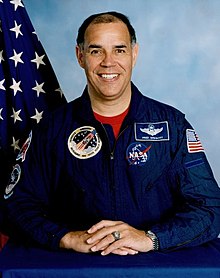
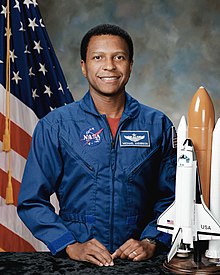
Bernard Anthony Harris, Jr. set another first for African Americans in space. A flight surgeon and a
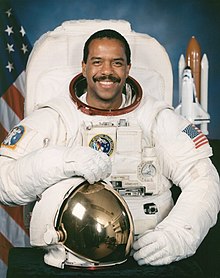
 Mae Carol Jamison
was the first African American in space, but she had a pretty exciting
life even beyond that. She danced. She entered Stanford University at
16. She got a BS in chemical engineering four years later and her
medical degree four years after that. She worked as a Peace Corps
Medical Officer. Inspired by Nichelle Nichols, Jamison was accepted
into the astronaut corps in 1987 and flew her only mission on STS-47 in
1992. She retired from NASA in 1993 (to NASA’s dismay) and has the
distinction of being the first real astronaut to ever appear on Star Trek (The Next Generation). And she’s done much more besides. Check out the link for more.
Mae Carol Jamison
was the first African American in space, but she had a pretty exciting
life even beyond that. She danced. She entered Stanford University at
16. She got a BS in chemical engineering four years later and her
medical degree four years after that. She worked as a Peace Corps
Medical Officer. Inspired by Nichelle Nichols, Jamison was accepted
into the astronaut corps in 1987 and flew her only mission on STS-47 in
1992. She retired from NASA in 1993 (to NASA’s dismay) and has the
distinction of being the first real astronaut to ever appear on Star Trek (The Next Generation). And she’s done much more besides. Check out the link for more.
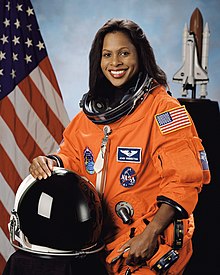
Joan Elizabeth Higgenbotham has multiple degrees and flew as a payload
Leland Devon Melvin has degrees in Chemistry and Materials Science Engineering and played football as a wide receiver at the University of Richmond and even “drafted” by the Detroit Lions in 1986 (Yes, kids you can be athletic and smart, too. Astronauts prove it regularly.), but repeated injuries killed that career. After working as an engineer at Langley Research Center, he was selected as an astronaut in 1998. Since joining NASA he has been co-manager of NASA’s Educator Astronaut Program, no doubt inspiring children and reminding them about why we need a space program. He flew as a mission specialist on STS-122 in 2008.
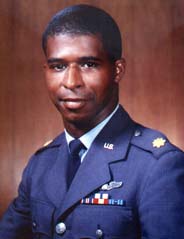
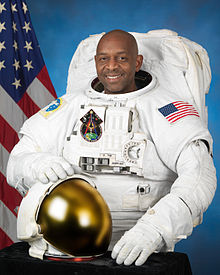 Robert Lee Satcher Jr
. (born on September 22, 1965) is a physician, chemical engineer, and
NASA astronaut. He has an MD as well as a doctorate in Chemical
Engineering, with experience in oncology and biomedical engineering. He
hasn’t yet flown, but he’s ready to go.
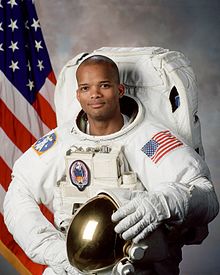
Robert Lee Satcher Jr
. (born on September 22, 1965) is a physician, chemical engineer, and
NASA astronaut. He has an MD as well as a doctorate in Chemical
Engineering, with experience in oncology and biomedical engineering. He
hasn’t yet flown, but he’s ready to go. Winston Elliot Scott
has a masters in aeronautical engineering, a 2nd degree black belt in
Shotokan karate and plays the trumpet. He’s also a navy pilot with 4000
hours flying 20 different aircraft, including helicopters, fighter
aircraft and civilian craft. Oh, and he’s also an astronaut, flying on
STS-72 in 1996 where he performed a spacewalk and STS-87 in 1997 where
he performed two more. He retired from NASA in 1999.
Winston Elliot Scott
has a masters in aeronautical engineering, a 2nd degree black belt in
Shotokan karate and plays the trumpet. He’s also a navy pilot with 4000
hours flying 20 different aircraft, including helicopters, fighter
aircraft and civilian craft. Oh, and he’s also an astronaut, flying on
STS-72 in 1996 where he performed a spacewalk and STS-87 in 1997 where
he performed two more. He retired from NASA in 1999.
Stephanie Diana Wilson is the second African American woman to go into

As can be readily seen, there’s a wealth of talent and intelligence here, as well as countless hours of hard work. And, in the end, that’s what you really need to be an astronaut. Read more...











.jpg)


.jpg)


I still remember - as just a normal citizen who felt a loss as well.
~M
Thank you for writing on this.
I followed your link to Wayne Hale’s blog and watched the video he linked to. Yeah, that’s not good. And the scary thing is, NASA isn’t the only institution/company that runs that way. I’ve worked in retail for 30 years, and I’ve run into the scenario depicted in the video twice - with FW Woolworth’s and with The Home Depot, two of the worst-run companies I’ve ever had the misfortune to work for and observe. And of course, these days Woolworth’s is defunct and THD massively downsizes every couple of months (and I’ll be willing to bet - you heard it here first - that THD files for Chapter 11 within the next 6 months).
I’m really hoping the scenario in the video isn’t widespread in NASA. If it is, that’s scary! I’ve been through that “proper channels” and “that’s really not how we do things here” BS too many times, that pressure to conform, conform, conform, don’t make waves, don’t stick your head up above the herd. If that’s how NASA’s being run, it needs an overhaul, now. A space program has to, by its very nature, be open to innovation and the open sharing of ideas. If it regularly squashes that, it’s doomed.
What scares me even more is that you’ve run into that pushing safety. Safety should be hard-wired into every consideration NASA makes. If safety concerns are getting the “yeah, yeah, yeah, we know, we’ll deal with it” treatment, something is dreadfully wrong, and something needs to be done to address it. I sincerely hope that the scenario in the video isn’t widespread in NASA. And if it is, I hope Wayne sent a copy of that video to every director in NASA.
And finally, big hugs to you on a day that I know is a bad, bad anniversary for you.
These we were losses for all of us, M. This is our program; it belongs to all of us. This wasn’t my personal loss. It was a loss for all of us.
Thank you for your kind words.
I think this kind of thinking is more widespread than NASA, assuredly. If other agencies and government offices (or even the public as a whole) were willing to question authority more seriously, perhaps we wouldn’t be in the wars we’re in or the financial nightmare we’re in.
Truth is, I think this kind of thinking is widespread in many places, many avenues.
I don’t want you to think I spent eight years in safety and was always obstructed - far from it. There are good reasons for pushback as well, but, one thing I discovered was that, if I could convince the program that what I wanted WAS the right thing to do, I never had to fight that battle again. In many organizations, that isn’t the case. And they didn’t have to be told again. They made that change part and parcel of their existing workload.
There are some great people working for NASA, some of the most remarkable minds and people, most with superlative ethics. But, no, there are still problems. I hope we learn from videos like this.
And thanks for the hugs. I’ll take ‘em.
“I know we would have tried, would have pulled out all the stops, killed ourselves to save them if we had known what was to happen. I believe that absolutely.”
Stephanie, I believe this absolutely too. I have tremendous admiration for people in NASA and don’t question their dedication. The problem is that it is a human organization, that has inherent human problems. Yet the amazing part for me is is not the flaws, but seeing people rise above their short-comings to do incredible things on behalf of others. I have the same respect for firefighters, policemen, and soldiers who risk their lives for the sake of others. Each of these organizations, like NASA, has flaws, sometimes deep flaws. But despite the flaws, there are individuals and teams who perform astonishing feats that make me ever grateful. Not complacent. But grateful.
Peace to you on this terrible day.
Thanks, Brian.
Definitely a harsh way to make the point that safety has to come first
I had no connection to any of it and it sickened me…. can’t imagine how people that worked anywhere near any of it managed… the horrible sense of loss
I’m not sure what I can say that hasn’t already been said.
I hope in the future you have a chance to change things and see your impact on them–to know that what you’ve learned, that what you’re willing to share now, prevents something much worse from unfolding. That you can see the fruits of the changes you’ve made already, and that you find peace from it.
Thank you for writing this. My thoughts are with you.
Oh, wow, Stephanie. Such a personal recount of the events of this tragedy. Since it was your flight and you knew the crew personally, I know this had to be really hard to write about… I’m so sorry. I hope, as you do, that enough was learned to prevent a recurrence. Thanks for sharing this.
Davida
Learning by attrition is always painful, flit. Thanks
My thanks also to you, Davida and ravyn. I’m not alone in being torn by this. Every year at the memorial, tears are shed. Nor am I alone in wanting this to be the last tragedy NASA ever has, to honor those who died and to reward the trust placed in us by the people who fund this: the citizens of the United States. This is their space program. I appreciate your sympathy.
It was a sad day for all. I love the space flight program and I was at work when this happened. Thanks for sharing this post.
This was as truly horrible tragedy. Our astronauts are some of the best, brightest, and bravest people of our nation. To lose any of them is just unrecoverable.
Thanks for writing this point to remind us all of the anniversary.
-Michael
Muckbeast - Game Design and Online Worlds
http://www.muckbeast.com
I wasn’t expecting to read a personal account of what happened. I thought it was just about the tragedy, not such a close take on it. It does make a huge difference for with time, these things become numbers and then we forget the lessons again.
Thanks for taking the time to write about this. May we all remember.
It is a hard thing for me to write about and I still get weepy when I do. Heck, I still get weepy when a Shuttle lands safely on the runway.
I mentioned, on a previous post, that we had a sacred trust to do everything in our power to keep these brave and talented people alive. I sincerely hope I never have to add another sad anniversary to my list.
Thank you for the kind words, mpaulin, Cambios and TLE.
I’m going to say something totally obvious here that is in no way intended to diminish the feelings everyone must have remembering incredibly brave people losing their lives in such a “spectacular” way. The fatality rate per astronaut has obviously been way higher than the fatality rate per traveller on the highways. But if we only cared about numbers of fatalities, we would put even more effort into reducing the more than 40,000 fatalities that occur each year on USA roads alone. And I don’t remember the details of the helicopter crash that killed the last two you mention, Stephanie, but somehow that makes me feel even more sick than the immediate Columbia tragedy itself, because it should surely have been easier to avoid. Ultimately I find it completely astonishing that anyone makes it out into space and back again, ever.
There are thousands of preventable deaths each year for any number of causes, Adrian, and I don’t think your comment diminishes anything. I try to do my part there, too, but driving sensibly and when necessary only and I never EVER drive while impaired. But your point is not lost.
There are people dying all over the world who don’t have to. Their causes and their deaths are not less tragic and I think you were right to remind us of that.
I remember it well, I was stunned wen I saw it on tv. The report you linked to was very interesting. There will be more loss of life no matter how vigilant everybody is,when you are talking about space there are just to many unknowns. In Gus Grissom’s own words,
“The conquest of space is worth the risk of life, our God given curiosity will force us to go there ourselves, because in the final analysis only man can fully evaluate the Moon in terms understandable to other men.” you can replace moon with whatever term you want, thing is there is a risk and the astronauts now about it and accept it, we can only minimize it, not remove it by being ever vigilant.
I agree with that. All the more reason, since we can’t remove risk, not to let our own actions add to it.