Showing posts with label rocket scientist. Show all posts

RS Classic: Manned vs. Unmanned

>> Sunday, July 25, 2010


Since I was asked about why manned spaceflight is so expensive, I thought I'd replay this post that told why I think it's worth it.

Reading the ScienceDebate2008.com responses to the responses, I was struck by something that scared me a little. Somehow, between Apollo and today, many scientists decided that manned space isn’t necessary. I mean, I knew that many regular folks, using their cellphones and watching the hurricane photographs on cable TV, were under the impression that space was of no interest, but I didn’t realize that scientists, perhaps the bulk of them, feel that way. Frightening.

That tells me two things: NASA’s PR stinks and we (I mean scientists, too) bought into a bunch of myths on what’s important. All of us. If scientists aren’t going to fight for space exploration, who’s going to do it?

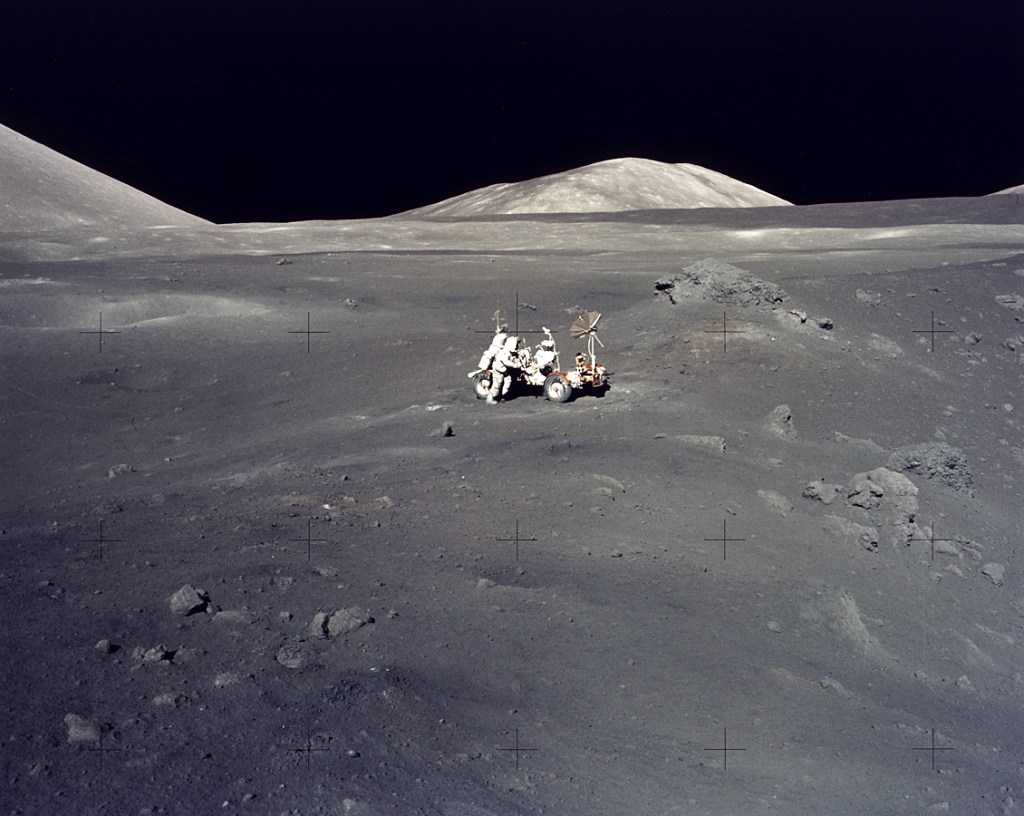
Few (or at least few in science and engineering) were naysaying that when Apollo was at it’s peak. You want to know what we did on the moon? Let me tell you, we did plenty, plenty like our little robots are working away to do on Mars and plenty those robots will never be able to do. You can read about it on the Apollo Lunar Surface Journals (and I recommend it for any space nuts). This is the real deal and I think we owe it to those pioneers to read those again and remind ourselves why it was we sent people to the surface of the Moon in the first place.

I know the arguments against human spaceflight on the taxpayer’s dollar. I just don’t agree with them.

What has human spaceflight ever done for us? (Usually followed by a list of important issues more deserving of money) A great deal. Space requirements drove solar power, recycling methodologies and waste management systems, remote medical operating systems (used all the time), nonflammable materials, pressure vessels, fuel cells, etc. We found out more about our planet by bringing soil home from the Moon than we ever would have found out otherwise. We’ve learned more about physiology, more about acceleration and low gravity on people. And manned spaceflight inspired us to do so much more in space than we ever would have, including communication for all those fun every day devices that people depend on and think come from who knows where.

Let private industry do it. Folks, I’ve been working in manned spaceflight for nearly 20 years. It isn’t easy. Space is unforgiving and we’ve learned a lot of really really hard lessons along the way. NASA was largely successful, not because they were willing to accept death and failure along the way but because they weren’t. This cavalier attitude by those trying to do it in the private sector, describing rockets that blow up seconds after launch or put equipment in the wrong orbit as “successes,” talking about acceptable losses among paying customers, just demonstrate they really don’t get it. SpaceShip One went up and barely kissed space for a tiny instant, and came down, oscillating wildly. Twice (only one time on the oscillating, I think). That is hell and gone from letting someone spend an appreciable amount of time in the uncompromising and harsh conditions of space, and it didn’t require nearly the same systems that a true spaceship will need. Let me put it a different way. I’ll believe it when I see it. [Editor's note, I've become somewhat more impressed with some commercial work since then. I hope they succeed, truly.]

Part of the problem here is that scientists see manned spaceflight as competing with unmanned scientific space flight endeavors. They see that because that’s exactly what has happened. Space and space endeavors are badly underfunded, with goals that change with the politicians in office, plans that sounded great on paper that are ungainly, expensive and impractical to the point of impossibility in the light of day, contractors get paid whether they work or not and a wealth of technological and scientific decisions are made by political “necessity.” You rob Peter to pay Paul all day, every day, it’s not mystery what you’ll accomplish: not a damn thing. That kind of thinking leads to foreclosure and a cardboard box under the underpass for regular people. In gov’t, it means you spend a lot of money to walk away with very little.

When manned programs, which are expensive, need more than they’re alloted, unmanned programs get crunched. But that isn’t manned spaceflight’s fault - it’s bad management (which is at least a whole blog of its own that I’ll do later) by the government. If you spent all your money on your electricity bill so that you can’t pay the water bill, does that mean you shouldn’t have electric lights? Or that you just haven’t managed your money correctly.

Unmanned space exploration is an excellent investment for any industrialized nation. There are things you can learn about the sun and radiation and astronomy and the weather that human spaceflight will never teach us. And vice versa, especially if we start actually exploring with people again. It isn’t that one can give us everything and one can’t. Neither can get us everything, but they complement each other wonderfully. It is foolish and unnecessary that they’re competing.

We spend hundreds of billions on the military every year, 10x more than any other nation and more than the rest of the world combined. Hundreds of billions. We spend 20-25 billion on space. In my opinion, it isn’t that we should have to choose between them, it’s that we need to find a smart way to do both.
Read more...

The Truth About This Rocket Scientist

>> Monday, May 24, 2010


Kathy at the Junk Drawer did an interesting thing a week or so back. She listed out some truths that one might not expect about a humor writer that were true about her. I thought this was a great idea. So much so, I'm stealing it, at least once.

Starting with here. So, here are five things about this Rocket Scientist that you might not have expected.

1. I'm not a math whiz. I don't do calculations in my head or plot out trajectories by hand. I can do math. It doesn't scare me or confuse me, but arithmetic, trig and calculus aren't my favorite things. What I like about math are word problems. I love word problems, love taking the real world and translating it into math or vise versa. But, get me to balance a checkbook or average out reliability rates? Yikes! That's what computers are for.

2. I didn't build rockets or planes or bombs for entertainment growing up. You'd be amazed how many people I know in this business received bombs (like fertilizer bombs) or who built rockets and model this or that growing up. Many are legomaniacs. I didn't do any of that. I didn't really play with dolls either. I read novels and made up stories or wrote poetry and played make believe in my own mind. Yes, naturally I was sooooo popular.

3. I'm not notably good with tools. Don't get me wrong. I know how to use saws and hammers and nails. I helped build/decorate a number of houses. I'm fairly mechanically adept, for a layperson. However, I don't fix cars or computers or appliances. I don't take things apart and put them back together for entertainment value. Could I? Maybe, but it doesn't interest me.

4. I believe in magic. Oh, I like science and facts and real world wonder. I just don't see why that precludes magic. I have children. I think that's magic. I love flights of fancy and dreaming and fantasy. I think looking for what's "impossible" is why we have as much science as we have. But that's just my opinion.

5. The last thing I ever expected to be was an engineer. I have wanted to be a writer for as long as I can remember. In fact, that's all I ever wanted to be. If you'd told me in high school I was going to be an engineer, I might not have ever stopped laughing. As you can see, the joke was on me. Scholarships called to me, and, once in engineering, I was just too stubborn to get out. I've enjoyed it, naturally, and I'm glad I took the path I took...mostly. But it was a path I never expected to take.

And now you know.

Read more...

RS Classic: Let’s Talk about the Space Shuttle and more

>> Wednesday, May 12, 2010


As Today.com is no longer in existence as it was (and they wouldn't let me on when they were), I'm going to recycle some of my old and beloved posts here 'cause, hey, I liked them. And, since I'm consumed with my current writing project, I feel less guilty.

Here's the first that wasn't "Hi, I'm me." from August 29, 2008:

I don’t know how many of you feel about the Space Shuttle. I’ve been working in the space industry for nearly 20 years and my own feelings are not clear cut. I read the blog for Wayne Hale yesterday. Wayne Hale was the manager for the Space Shuttle. I know him and I know he cares deeply for this program, for what he did. He knows the end is inevitable.

The Shuttle program is coming to an end. People are talking about extending it like that’s a viable option. But the people who supported this program and provided eighty kagillion [kagillion is a technical term] tiny custom parts have moved into other businesses. Some are suppliers that have moved to more viable customers, providing materials that will be in demand for the long haul. Or they’re retiring. After all, the Shuttle’s been around for more than twenty years. Or they’ve already become part of the exploration effort.

The decision can’t be undone.

Truthfully, I’m not as fond of the Shuttle as Wayne is. Since my focus has been safety, it’s hard for me to look at it without seeing as a collection of things that can go wrong, some of which we didn’t see coming. I see it as a technological achievement that has also killed fourteen astronauts and I, like Wayne, never want that to happen again.

I see it as a mishmash of conflicting requirements, an exceptional engineering feat that was sold as more than a single item can be. Those unrealistic expectations have tarnished it despite the hard work it has done year after year, coming home chipped and worn from the horrendous environments of space and reentry. Yet, battered and limping somewhat from the clever workarounds we need to keep it’s aging systems working effectively and reliably, it can still do what nothing else we have can do: take big loads into orbit and bring them back down safely. And it can protect crews as large as seven going up and down. Building a replacement has been a nontrivial task and we’re not there yet.

No, I’m not as fond of the Shuttle as some. But a lot of good people have devoted decades to her care. And she has done some damn fine work. I know her problems, but I respect her and the job she’s done.

Here’s hoping her last few flights go off without a hitch.


Ironic, isn't it, how the more things change, the more they stay the same. Who knew? It's still pertinent. The cool thing about recycling this is that it makes me think of something I don't think I have written about. Next time, then.

Read more...

A quick Anniversary

>> Friday, May 8, 2009

For those that are interested, today, May 8, is my twentieth anniversary working at Johnson Space Center or supporting it. I started here 20 years ago, today.

Read more...

Labels

Blog Makeover by LadyJava Creations