

RS Classic: Manned vs. Unmanned
>> Sunday, July 25, 2010
Since I was asked about why manned spaceflight is so expensive, I thought I'd replay this post that told why I think it's worth it.
Reading the ScienceDebate2008.com responses to the responses, I was struck by something that scared me a little. Somehow, between Apollo and today, many scientists decided that manned space isn’t necessary. I mean, I knew that many regular folks, using their cellphones and watching the hurricane photographs on cable TV, were under the impression that space was of no interest, but I didn’t realize that scientists, perhaps the bulk of them, feel that way. Frightening.
That tells me two things: NASA’s PR stinks and we (I mean scientists, too) bought into a bunch of myths on what’s important. All of us. If scientists aren’t going to fight for space exploration, who’s going to do it?
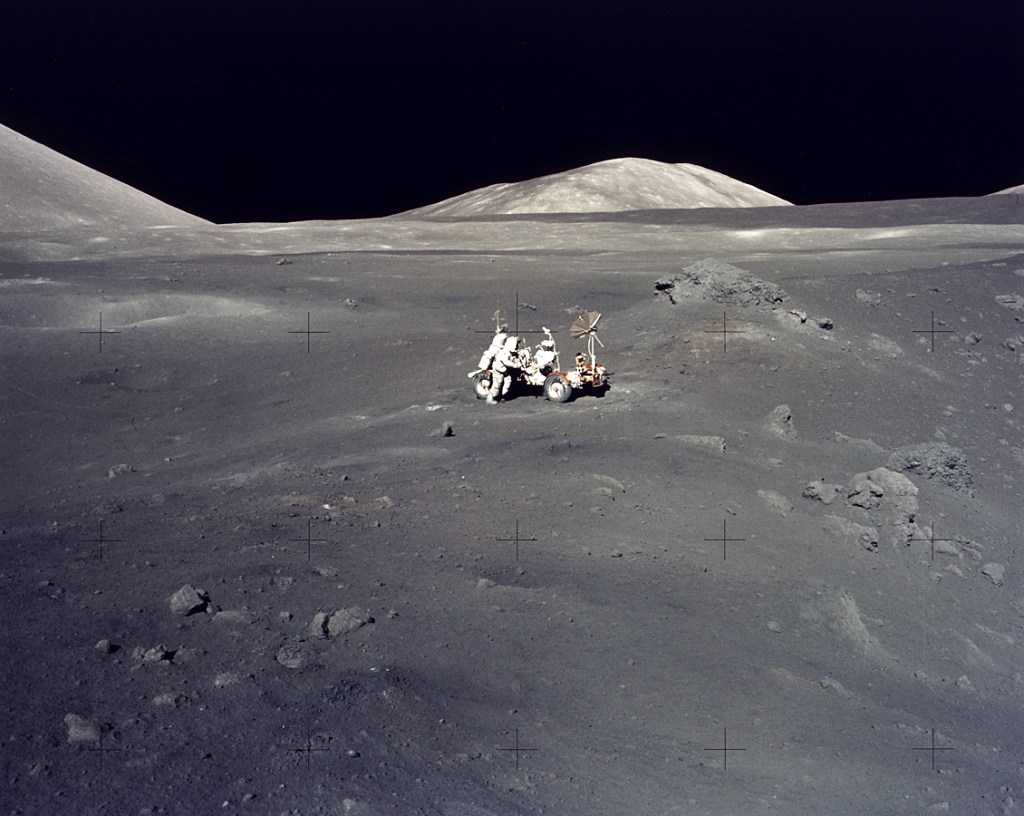
Few (or at least few in science and engineering) were naysaying that when Apollo was at it’s peak. You want to know what we did on the moon? Let me tell you, we did plenty, plenty like our little robots are working away to do on Mars and plenty those robots will never be able to do. You can read about it on the Apollo Lunar Surface Journals (and I recommend it for any space nuts). This is the real deal and I think we owe it to those pioneers to read those again and remind ourselves why it was we sent people to the surface of the Moon in the first place.
I know the arguments against human spaceflight on the taxpayer’s dollar. I just don’t agree with them.
What has human spaceflight ever done for us? (Usually followed by a list of important issues more deserving of money) A great deal. Space requirements drove solar power, recycling methodologies and waste management systems, remote medical operating systems (used all the time), nonflammable materials, pressure vessels, fuel cells, etc. We found out more about our planet by bringing soil home from the Moon than we ever would have found out otherwise. We’ve learned more about physiology, more about acceleration and low gravity on people. And manned spaceflight inspired us to do so much more in space than we ever would have, including communication for all those fun every day devices that people depend on and think come from who knows where.
Let private industry do it. Folks, I’ve been working in manned spaceflight for nearly 20 years. It isn’t easy. Space is unforgiving and we’ve learned a lot of really really hard lessons along the way. NASA was largely successful, not because they were willing to accept death and failure along the way but because they weren’t. This cavalier attitude by those trying to do it in the private sector, describing rockets that blow up seconds after launch or put equipment in the wrong orbit as “successes,” talking about acceptable losses among paying customers, just demonstrate they really don’t get it. SpaceShip One went up and barely kissed space for a tiny instant, and came down, oscillating wildly. Twice (only one time on the oscillating, I think). That is hell and gone from letting someone spend an appreciable amount of time in the uncompromising and harsh conditions of space, and it didn’t require nearly the same systems that a true spaceship will need. Let me put it a different way. I’ll believe it when I see it. [Editor's note, I've become somewhat more impressed with some commercial work since then. I hope they succeed, truly.]
Part of the problem here is that scientists see manned spaceflight as competing with unmanned scientific space flight endeavors. They see that because that’s exactly what has happened. Space and space endeavors are badly underfunded, with goals that change with the politicians in office, plans that sounded great on paper that are ungainly, expensive and impractical to the point of impossibility in the light of day, contractors get paid whether they work or not and a wealth of technological and scientific decisions are made by political “necessity.” You rob Peter to pay Paul all day, every day, it’s not mystery what you’ll accomplish: not a damn thing. That kind of thinking leads to foreclosure and a cardboard box under the underpass for regular people. In gov’t, it means you spend a lot of money to walk away with very little.
When manned programs, which are expensive, need more than they’re alloted, unmanned programs get crunched. But that isn’t manned spaceflight’s fault - it’s bad management (which is at least a whole blog of its own that I’ll do later) by the government. If you spent all your money on your electricity bill so that you can’t pay the water bill, does that mean you shouldn’t have electric lights? Or that you just haven’t managed your money correctly.
Unmanned space exploration is an excellent investment for any industrialized nation. There are things you can learn about the sun and radiation and astronomy and the weather that human spaceflight will never teach us. And vice versa, especially if we start actually exploring with people again. It isn’t that one can give us everything and one can’t. Neither can get us everything, but they complement each other wonderfully. It is foolish and unnecessary that they’re competing.
We spend hundreds of billions on the military every year, 10x more than any other nation and more than the rest of the world combined. Hundreds of billions. We spend 20-25 billion on space. In my opinion, it isn’t that we should have to choose between them, it’s that we need to find a smart way to do both.


.jpg)


.jpg)


