

RoHS and Regulating Smartly
>> Tuesday, July 6, 2010
I am all for doing the smart thing when it comes to our environment. I understand (quite well) that asbestosis and many other environmental lung disorders will be a thing of the past largely because of regulation. I know that the EPA has had a significant impact on the environment, and most of it was good. I know that California's tight air quality regulations have drastically reduced the air pollution in cities that used to be lost under smog. I've heard of creeks/rivers so polluted they could catch on fire and I'm grateful that, except off the Gulf Coast (thanks to the oil spill), that's also a rarity in this country.
And I know regulations involving lead in paint, gasoline and children's toys are a huge factor in why the lead level in this generation's children is much lower than it was in the generations that came before. But that doesn't mean that every ban is the right thing to do, even for something as dangerous as lead.
The Restriction of Hazardous Substances Directive, is a directive of the European Union intended to reduce dangerous heavy metals and two flame retardant materials in industrial wastes. Great idea, largely. There can be as much as 2 kg of lead in a cathode ray tube (which are going the way of the dinosaur) and more lead in many other components. To date, I've heard little to no complaining about those aspects of the regulation. In fact, in my technical part of the world, all I hear complaining about is lead-free solder and pure tin (i.e. lead-free) plating.
Now, before I go further on this, let me mention two things. First, I'd take this (RoHS) a lot more seriously if batteries (both those with cadmium and those with lead acid) were part of this directive - they're not. There is a battery directive that limits cadmium, but not lead, although it promotes more battery recycling. But, at this point, 90% of the lead put in products today is used in batteries. I have to say, dealing with the rest of the lead while leaving the lead battery issue largely untouched is much like closing the gate once the horse has left.
Secondly, though I have concerns about the lead-free solder, there are some uses where lead-free solder might be the right choice, for various reasons. But not always.
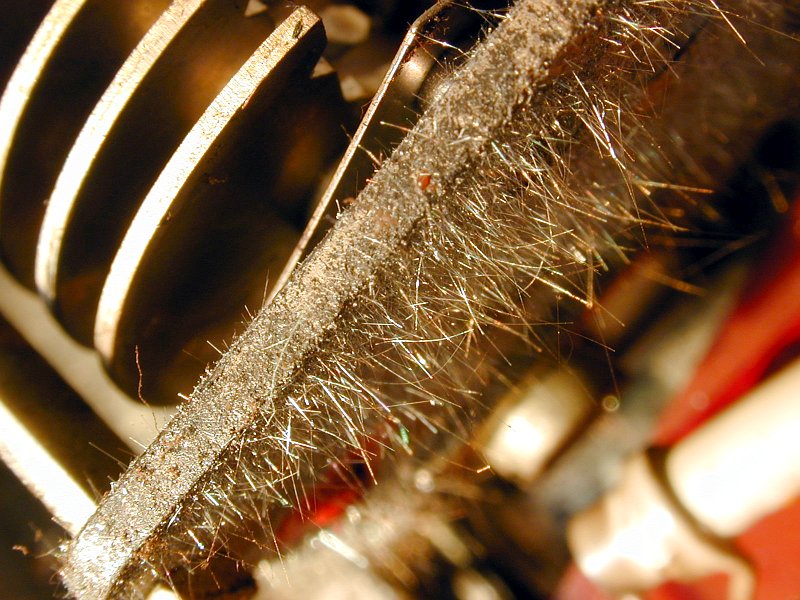
Now there's a whole list of issues with lead-free solder. but what I want to focus on here are those that result from the use of pure-tin plating: tin whiskers. Because reducing a tiny fraction of the lead in the environment (there must be natural sources of lead in the environment, too, right? That's where we get it... Sorry, distracted) is only the right thing to do if the cost for doing so (i.e the good of the consumer) isn't higher.
In this case, I don't think it is. Sure, in most cases of consumer electronics, the power source is small (like a battery, not covered by the RoHS) enough that metal vapor arcing is unlikely. Which means that, worst case, you get a short that shorts it out - and it's broken - and, best case, it's just an intermittent irritation. But some plugged in electronics have the power, and to spare, to create metal vapor arcing, which can not only destroy the electronics, but everything around it, readily causing a fire. High price for a few grams of lead. And, given the ubiquitous nature of electronics, a design that allows the arc once can allow it over and over again. A number of metal vapor arc failures happened in designs that included circuit protection I might add.
After all, RoHS just applies to consumer products. Which is great. Unless, say, your consumer product happens to be a car, which has a fairly high power electric system with more than enough power to induce metal vapor arcing. But, even if it doesn't burst on fire while you're driving, imagine what an intermittent power or data short can do to an electronically controlled car like most of us drive.
But, let's assume that consumer electronics are "perfectly safe" with minimal impact. Unfortunately, with the vast bulk of consumer electronics requiring lead-free electronics, parts with plating containing sufficient lead to preclude whiskering will become either impossible to find or prohibitively expensive for those applications where high reliability parts are essential.
Like medical equipment like apnea monitors and pacemakers, which are specifically exempt from the RoHS requirements (at this time), but that have had to be recalled because of tin whisker failures.
Or commercial satellite failures, which, while no one was hurt, were very very expensive. Or military equipment like planes and missiles. Or the Space Shuttle. The military, NASA and the FDA have specific prohibitions against pure tin plating, yet they've all been struck with tin whiskers from parts that got through the system.
Or there was this, the tripping of a nuclear reactor by the lowly tin whisker (and there are multiple other examples of nuclear scrams and pre-trips of nuclear reactors from the same cause). And there are more failures no one's willing to admit to except as an anecdote.
(For those who have become fascinated, check out the interesting stuff on silver whiskers and zinc whiskers, the latter having taken out whole highly redundant computer centers).
The lesson I want to impart here is that we need to be careful and cautious about what we do to the environment and ourselves, but we need to understand the implications of trying to make everything "perfect." Regulations (if they're smart) can do tremendous good, preventing such catastrophes as we see off in the Gulf right now (an abject lesson in lax regulation). But a regulation that does not take sufficient account of the consequences, can be just as destructive and short sighted.
We need to be smart about regulation instead of one extreme or the other.


.jpg)


.jpg)


