Showing posts with label education. Show all posts

Engineering and Women

>> Saturday, November 23, 2013

So, someone I know on facebook posted a link to an ad by GoldieBlox, touting the notion that girls don't have to be stuck with "girl toys" that don't do anything and doom them to particular life roles/preclude them from certain professions. It's a cute ad, but I'm afraid I feel they still don't get the concept.

Here's a quote from their "about" page: "By tapping into girls' strong verbal skills, our story + construction set bolsters confidence in spatial skills while giving young inventors the tools they need to build and create amazing things." So, by tapping into a stereotypical quality girls are supposed to have, you think you can help them overcome a stereotypical deficiency.

But stereotypes are the problem. Oh, not the whole problem. It is certainly possible, even probable that, overall, more girls are genetically predisposed to verbal skills over spatial reckoning, etc.  So what? First of all, since neither motor skills or spatial reckoning is my strength, I can say that the lack thereof hardly precludes becoming an engineer, excelling at math, excelling at physics, and making a career in that field, because, hey, I did it.

More importantly, what is "generally" true doesn't mean diddly to an individual. There are any number of dead-eye female pilots who have spatial reckoning (and generally other aspects of science and or engineering like Eileen Collins, the first female Space Shuttle commander) or engineering intuition, or math skills out the wazoo. Each girl, like every boy out there, is an individual, who might be dead on the money on some stereotypical feature and blowing the curve on the next.

The problem isn't the toys. It's what you hear and what you see and what you're shown growing up. It's the level and tenor of the expectations your parents and teachers and mentors and even peers have that discourage girls from pursuing engineering and science and math. If you don't change that, nothing changes.

Because, here's the thing. If you find "girl" toys too limiting for your little princess, there isn't a thing in the world that keeps you from getting her building blocks (they come in pink, too)  or robots or tinkertoys or trains or remote control cars or science kits. Getting her those things won't stop her from being your princess any more than Barbies and babydolls and Hello Kitty stuff will make her a princess if that's not what she wants to be. Not only can you do it now, you could ALWAYS do it.

I'm a parent. I buy the things my kids show an interest in. My son likes wooden puzzles and Legos and cars and blankets. He likes stuffed animals, too, but his sister steals them (he steals her blankets so it's all good). His sister loves dolls and tea sets and cars and figurines of any kind and stuffed animals. I've bought her puzzles, but she's not interested in them though she completely conquered a set of latches in seconds. They both inherited 9000 books and I keep buying them more though neither will let me read to them.

I will continue to buy my children things they show an interest in, not worried about gender or stigmas because, in this house, there's no stigma if my son plays with a doll or wants to get his toenails painted (he does, if I'm painting nails). There's no stigma if my daughter plays with cars or Legos - why would there be? And that is how I'll raise my children, how I raised my eldest daughter. I will tell them, and absolutely believe it and show it in word and deed, that nothing is automatically beyond them, that the only limits on them are in their talent and the limits they set themselves.

I won't make a big deal out of it because I don't have to. I just have to keep from getting in their way. No one had to tell me I could do complex math as well or better than anyone else because it never occurred to me that I couldn't. No one had ever told me I couldn't so why would I think so? No one had ever imposed any restrictions on my abilities or told me I had no business learning X subject or Y subject so I grew up figuring out what I was good at and wasn't good at by myself, through exposure. I never had teacher say, "I don't think a girl like you belongs in physics" any more than I had a parent who said, "Girls should stick to home ec or typing." Actually, I think my mother wanted me to take both subjects, but I stunk at them. But no one stopped me from taking science or math or engineering or anything else I wanted. I do know women, many of them engineers now, who DID have that happen, with parents or college professors or boyfriends, etc.

I was able to find my own limits because no one imposed their own limits, or their perceptions of my limits, on me. And that, boys and girls, is the key, I think. You can't make a boy good at math because he's supposed to be any more than making him play football and learn kung fu will keep him from being a drag queen if that's what he's got a hankering to do (as many a homophobic parent has discovered). People set their own limits and gravitate to the things they excel at or enjoy. If you haven't set any limits, they may still aim small. Or a direction you never saw. But there's nothing wrong with wanting to be a kindergarten teacher or a nurse or an oral hygienist. Nothing wrong with being a drag queen either if it makes you and others happy.

It's when we set preconceived limits upon our children that we limit their potential. If we tell our girls over and over that girls just can't do math, chances are, when they take algebra, they'll be convinced it's beyond them, whether it really was or not. If we tell our children that they can't ever go to college because they're too poor and will have no choice but to work, those children might very well never even try for opportunities intended for kids just like them because they've decided it's hopeless. If we treat children who are Latino (and may struggle with English especially at first) or black as if one couldn't expect much from them, they will likely fulfill our expectations, even if those expectations are unvoiced.

There are many who believe children from the far east are inherently smarter. I don't think so. Their culture values education and parents routinely make sacrifices and have huge (perhaps too huge) expectations of their children. That has its own issues but instilling unnecessary limitations isn't one of them (though there is notably a difference, even now, in what's expected from boys and girls in those cultures). I think this difference in emphasis and expectations is the key to their relative success.

You want your child to fulfill their potential? Buy them toys and games and books and encourage activities that excite, interest, and challenge them. Not you, not other people's children, but them, your children, the individuals. Their imagination might take off with building sets or action sets. It might be dolls and doll houses. It might be puzzles and physical toys. Talk to them, get to know them, encourage their interests and strengths. Find what each individual child responds well to and what encourages those children in subjects or fields that might have not interested them before.

But, whatever you do, don't get in their way. Don't ever let your own limitations or perceptions of their limitation get in the way of their succeeding where you never expected it. Kids can do that, more often than you think.

If we'd just let them.

At least, that's how I see it.

Read more...

RS Classic: Saturday Quote-a-Thon - Learning a Little Somethin’

>> Saturday, October 23, 2010

Once again, reusing quotes because, hey, I'm lazy.

With all the education talk this week and elder sibling stuff goin’ on, seemed like learning might be a good subject for quotes. Let’s just dig into the Big Bag O’ Quotes and see what we find.

He that will not apply new remedies must expect new evils.
–Sir Francis Bacon

Advice is seldom welcome, and those who need it the most, like it the least.
–Philip Dormer Stanhope, Lord Chesterfield

Men occasionally stumble over the truth, but most of them pick themselves up and hurry off as if nothing had happened.
–Winston Churchill

Even if you do learn to speak correct English, whom are you going to speak it to?
–Clarence Darrow

The most glorious moments in your life are not the so-called days of success, but rather those days when out of dejection and despair you feel rise in you a challenge to life, and the promise of future accomplishments.
–Gustave Flaubert

The most valuable of all education is the ability to make yourself do the thing you have to do, when it has to be done, whether you like it or not.
–Aldous Huxley

Colleges are places where pebbles are polished and diamonds are dimmed.
–Robert Green Ingersol

Experience, the most brutal of teachers; but you learn, my God do you learn.
–C. S. Lewis

The pupil who is never required to do what he cannot do, never does what he can do.
–John Stuart Mill

I respect faith, but doubt is what gives you an education.
–Wilson Mizner

If history teaches anything, it teaches that self-delusion in the face of unpleasant facts is folly.
–Ronald Reagan [Ed: might we remind the GOP of that now?]

What is wanted is not the will to believe, but the wish to find out, which is the exact opposite.
–Bertrand Russell

One of the saddest lessons of history is this: If we’ve been bamboozled long enough, we tend to reject any evidence of the bamboozle. We’re no longer interested in finding out the truth. The bamboozle has captured us. It is simply too painful to acknowledge — even to ourselves — that we’ve been so credulous. (So the old bamboozles tend to persist as the new bamboozles rise.)
–Carl Sagan

Read more...

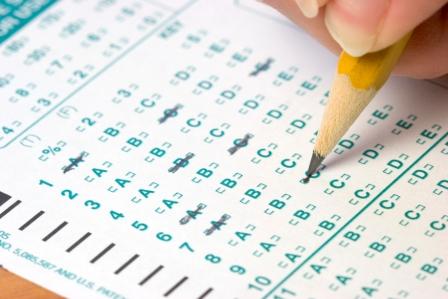
You Can't Teach English via Scantron

>> Wednesday, September 8, 2010

Let me apologize for the apparent hiatus (which I failed to warn y'all about) over the last week and a half, both in new posts and in reading/responding to other blogs. I was working under a day-job push that resulted in overtime, a hurry-up revision of a draft novel and considerable forward work on an unfinished manuscript (that went quite well: 20K words over the last four days). So the neglect was not in vain. Thanks for the patience.

Now, moving on. Here, I have a couple of posts in a row inspired by dealing with my teenaged daughter. One of them is touching on something I've noted before: my brain doesn't work like other people's brains. In general. Apparently, my daughter has a similar (if not the same) problem as manifested in just the first week of English class.

Now, in general, my daughter kicks literary butt in English. She likes reading. She writes very well. She interacts in class and finds the topics appealing. However, summer reading was evaluated via scantron test the first week and her grades were, well, abysmal, despite the fact she read all but one. Part of it stemmed from the fact that she read them at the beginning of the summer and some of the questions were nitpicky details on page X questions (or so she told me). But, part of it was that her interpretation of the book, the characters and what it all means often falls outside the multiple choice answers provided. So, what to pick?


Man, that took me back. Although I've always seriously ruled in English class, my scores in English matched my math score on SAT (which surprised the snot out of me) and brought my cumulative score down on my ACT (which didn't mean it was bad, just not as stellar as science and math). Why? Same damn reason.

"Read this selection and choose the answer that best describes the main idea." Except my understanding in no way matched with any of the choices. I could defend my opinion, but there is generally no comment section on a scantron sheet.

Now, don't get me wrong. There are areas where multiple choice is appropriate. Math and science tend toward black/white answers*, repeatable and verifiable in real life. And the answer should be the same even if the problem is attacked in different ways. Similarly, historic facts can be addressed via multiple choice. However, once you moved to interpretation of those historic facts, once you start looking for perspective and evaluation of things that are subjective, this one-size-fits-all thinking falls apart. True/false history tests were the bane of my existence. "True/false: X often happened in the Y era." How frequently before it counts as often? Twice if they were notable? A hundred obscure times? Aaaaaaaah!

It's particularly ironic that many teachers and/or educational institutions push for black/white answers when artists and writers, particularly the great ones studied in schools, were great because they challenged black and white thinking. I think part of this is driven by students (and, to some extent, teachers for the convenience of grading). When I was growing up, nothing got the class to groaning like the prospect of an "essay" test. An essay test answer shows you really understand things, that you thought about it, felt it, accepted it. If you don't understand it, don't get it, you'll fail. Unless your teacher was none to bright, you couldn't fake it.

But that's real learning. Many students don't want to learn by the time they get to high school. They just want to get through school. Just tell them what they need to know for the test so they can move on without it changing their lives. Thinking and feeling is too personal and, as my daughter found out, no guarantee you'll do well on the test.

This reminds me of a lesson I learned in college. Doing poorly in my electrical engineering class, I was disheartened and my English major roommate suggested going with her to her English class as a cure. Now, I'd tested out of all my required English, so I didn't have any of the standard classes. I protested that going to a class I didn't have to go to was unlikely to make me feel better. Well, my roommate was right, as she frequently was.

They were discussing a Wordsworth poem I had not read before. I read it during the class and the discussion came to what was meant by a particular passage. Different students from the actual class were raising their hands and giving answers. Truth was, I could see how they thought so in that section, but the teacher was adamant those answers were "wrong." Despite the fact I had no business being there anyway, I raised my hand and answered - "the" answer the teacher wanted. By the end of the class, that I did feel better about my intelligence. But I also learned that many (not all) people teaching subjective subjects can be seduced into thinking there's only one answer to complex questions and passing that thinking on to their students.

I am convinced that Wordsworth himself, if he had been teaching that class, would not have the right to tell a reader their interpretation was "wrong." I'm proud to say that my sister, the English professor, does not teach English that way, as attested by the endless hours she spends grading essays, exercises and essay tests.

As schools are squeezed for funding, more and more, the schools are going to be stressing what can be objectively measured, leaving many of us non-standard thinkers behind. Which is a very very sad thing given that almost every improvement, advance, invention and artistic success ever has been direct result of thinking outside the norm.

*I mentioned that math and science is black and white and I stand by that in the realm of public education. There we are teaching laws and science, math skills and formulas that have been demonstrated countless times. However, in the real world where, for every problem, there might be any number of solutions, none of them optimum, that isn't true. Not only can you get there many different ways, but the answers aren't identical. And, in fact, my non-standard thinking and unusual perspective when looking at different solutions is one of the reasons I'm so good at my job.

Read more...

The Love of Learning

>> Tuesday, July 20, 2010

First an announcement: For the next two months, I'm forgoing tarot questions on Ask Me Anything. Up until recently, I was getting a steady supply of those and, truthfully, they're generally not very interesting for anyone but the questioner. On October 1, I'll open it back up to tarot questions, but I'm going to limit the number to two per month so people can still come here to learn more general stuff.

Now, here's why. For a while there, all I was getting were tarot questions. Now, I offered to do tarot readings and I'm not begrudging what I did. What I discovered, however, with post after post that wasn't really pertinent to anyone but the questioner was that readers were losing interest. I don't have a lot of them, but the ones I've had, consistently, weren't bothering to check it any more.

That made me sad.

Worse, I was losing interest myself. One reason I wanted to do Ask Me Anything is because I don't know everything so, in almost every case when someone asked me a question, I learned something. It is only the past week when I had a handful of thought-provoking, research-requiring questions that I realize how much I had missed questions like that, digging into the meat of it, having to explain why I thought the way I did.


I'd missed it. Terribly. So, in the interest of enjoying my Ask Me Anything blog and learning a little something something whenever I can, I'm closing it off to tarot questions until October (which is a good month to start 'em back up) and I'm limiting the number to two a month.

Read more...

Sunday Soapbox: Educational Iniquity

>> Sunday, April 11, 2010


*Steps on soapbox*

On my posts earlier in the week regarding the attitude toward "poor people," education was mentioned and Relax Max pointed out that getting an education was less than useful if there wasn't a job to plug into.

I sort of agree but I mostly don't. Here's why.

The part I sort of agree because, of course, that's technically true. Few people are going to jump from college to a new business and make a killing. Most will be looking for jobs. And, all "educations" are not the same when it comes to marketability. If you get a bachelor's degree in "English" for instance, you are not going to be as marketable as someone who gets a bachelor's degree in chemical engineering. In fact, a Ph.D. in English is unlikely to garner you as many options as a bachelor's degree in chemical engineering and, with a masters or Ph.D. in chemical engineering, you may never have to worry about unemployment. That's not a reflection on the value of knowledge of the English language, mind you, but a reflection on (a) how common the degrees are and (b) how useful potential employers find them.

However, I mostly don't agree because, when it comes there are a number of professions we are desperately short of like technical degrees. And one's prospects with a bachelor's degree are much better than they are otherwise. According to the Bureau of Labor Statistics, unemployment rates (people >25) for those with a Bachelor's degree or more is 4.9% vs. 14.5% for those who don't have a high school diploma, 10.8% for those who have a high school diploma, and 8.2% for those with some college. There are also nearly 4x as many degreed people employed (45.8 million vs. 11.8 million) as those who don't have high school diplomas. So, an English degree is certainly better than nothing at all.

I suspect there are many reasons for this, not the least of which is that, if you're choosing between two job applicants, a degree is as good a reason as any to pick one over the other.

But, the truth is, there are a number of places where we have shortages, including nurses, doctors, scientists, engineers, and any number of technical experts. I might also point out that ideas and creative thinking have done more for this country than any other natural resource.

Unfortunately, the availability of higher education is not equitable. True, some exceptional students who are completely focused and brilliant with the right teachers and the right circumstances can sometimes get a real education anyway. It can happen if they manage to learn the study habits they need and stay focused and get the support they need and get lucky. It can happen, just like people can sell their first novel to the first publisher they ask or become a rich and famous singer out of the blue. But it's not easy.

If, however, one's parents are educated and (almost always) relatively comfortably off, college is often almost a given.

Many of us pretend that everyone has the same opportunities as everyone else.

Sadly, that's not so. And those without educations are suffering disproportionately.

And that's not even counting how much better off our country might be with more technical expertise.

*Steps off soapbox*

Read more...

Saturday Quotathon: Education

>> Saturday, December 26, 2009


It's Saturday again and I let my blog go all week, even on days I exercised - I've done that a few times, now. Must get back into the habit. Let's see, what can I find in my bag of quotes today?

First quote I came upon is education. OK, we'll go that route.

Education’s purpose is to replace and empty mind with an open one.
-Malcolm S. Forbes

The totally convinced and the totally stupid have too much in common for the resemblance to be accidental.
-Robert Anton Wilson

All the great economic ills the world has faced this century can be directly traced back to the London School of Economics.
- NM Perrera

Sociology is the study of people who do not need to be studied by people who do.
- ES Turner

His ignorance is encyclopedic.
- Abba Eban

It's great to be with Bill Buckley because you don't have to think. He takes a position and you automatically take the opposite and you know you are right.
- J.K.Galbraith

He can compress the most words into the smallest idea of any man I know.
- Abraham Lincoln

There is a theory which states that if ever anyone discovers exactly what the Universe is for and why it is here, it will instantly disappear and be replaced by something even more bizarre and inexplicable. There is another theory which states that this has already happened.
- Douglas Adams

I find television very educating. Every time somebody turns on the set, I go into the other room and read a book.
- Groucho Marx

Everywhere I go I'm asked if I think that university stifles writers. My opinion is that they don't stifle enough of them.
- Flannery O'Connor

If all the young ladies who attended the Yale promenade dance were laid end to end, no one would be the least surprised.
-Dorothy Parker

There's only one corner of the universe you can be certain of improving, and that's your own self.
-- Aldous Huxley

Man masters nature not by force, but by understanding.
- Jacob Bronowski, 1908 – 1974

Nature is trying very hard to make us succeed, but nature does not depend on us. We are not the only experiment.
- R. Buckminster Fuller, 1895 - 1983

Read, every day, something no one else is reading. Think, every day, something no one else is thinking. Do, every day, something no one else would be silly enough to do. It is bad for the mind to be always part of unanimity.
--Christopher Morley

There was a definite process by which one made people into friends, and it involved talking to them and listening to them for hours at a time.
-- Rebecca West

The way you overcome shyness is to become so wrapped up in something that you forget to be afraid.
-- Lady Bird Johnson

You have to find something that you love enough to be able to take risks, jump over the hurdles and break through the brick walls that are always going to be placed in front of you. If you don't have that kind of feeling for what it is you are doing, you'll stop at the first giant hurdle.
-- George Lucas

In forming a bridge between body and mind, dreams may be used as a springboard from which man can leap to new realms of experience lying outside his normal state of consciousness.
-- Ann Faraday

I believe that imagination is stronger than knowledge - that myth is more potent than history. I believe that dreams are more powerful than facts - that hope always triumphs over experience - that laughter is the only cure for grief. And I believe that love is stronger than death. Robert Fulghum

With the gift of listening comes the gift of healing.
--Catherine de Hueck

What is defeat? Nothing but education, nothing but the first step to something better.
- Wendell Phillips, 1811 - 1884

Everything has its wonders, even darkness and silence, and I learn, whatever state I may be in, therein to be content.
--Helen Keller, 1880 – 1968

It’s not what you look at that matters, it’s what you see.
--Henry David Thoreau

Expertise in one field does not carry over into other fields. But experts often think so. The narrower their field of knowledge the more likely they are to think so.
-Robert Heinlein “Time Enough for Love”

There's no way to know for sure without finding out what a "kg" is, and my belief, as an American, is that if I have to start understanding the metric system, then the terrorists have won.
-Dave Barry

It is simplicity that makes the uneducated more effective than the educated when addressing popular audiences.
-Aristotle

There were 183 of us freshmen, and a bowling ball hanging from the three-story ceiling to just above the floor. Feynman walked in and, without a word, grabbed the ball and backed against the wall with the ball touching his nose. He let go, and the ball swung slowly 60 feet across the room and back — stopping naturally just short of crushing his face. Then he took the ball again, stepped forward, and said: "I wanted to show you that I believe in what I'm going to teach you over the next two years."
-Michael Scott, first CEO of Apple Computers

Education is an ornament in prosperity and a refuge in adversity.
-Aristotle

It is the mark of an educated mind to be able to entertain a thought without accepting it.
-Aristotle

Sometimes I really think people ought to have to pass a proper exam before they're allowed to be parents. Not just the practical, I mean.
-Terry Pratchett

Every intelligent child is an amateur anthropologist. The first thing such a child notices is that adults don't make sense.
- John Leonard.

History does not always repeat itself. Sometimes it just yells, "Can't you remember anything I told you?" and lets fly with a club.
- John W. Campbell

It has always seemed strange to me that in our endless discussions about education so little stress is laid on the pleasure of becoming an educated person, the enormous interest it adds to life. To be able to be caught up into the world of thought — that is to be educated.
- Edith Hamilton

The principal goal of education in the schools should be creating men and women who are capable of doing new things, not simply repeating what other generations have done; men and women who are creative, inventive and discoverers, who can be critical and verify, and not accept, everything they are offered.
- Jean Piaget

After bread, education is the first need of the people.
- Georges Danton

There are two ways of spreading light: to be
The candle or the mirror that reflects it.
- Edith Wharton


And there you go.

Read more...

Bare Necessities: Cultural Studies

>> Wednesday, September 9, 2009


What the heck am I talking about? Cultural Studies? That's not a public school class!

No, but it ought to be. Sure, some social studies classes include some cultural information, usually wedged in between GDP information, population and interminable maps. Sometimes you accidentally get a little in Political Science classes, but the classes are more about government than about people and, generally, they are not interchangeable. You're more likely to get interesting cultural information in history or a foreign language class and that's a real pity.

Exposing oneself the history, the culture, the religion, the language, the music, the art of other societies and cultures of the world can do wonders for one's own mind. When you understand where attitudes and philosophies come from, if you understand the history and culture of a people, it's much harder to dehumanize them or get lost in hatred.

Travel is good for that, too, and, though I'm not a traveller myself, I respect those who learn other cultures by immersing themselves.

The thing is, isolated in your own little world, the culture and society you grew up with, it's so easy to think you know everything, that you can judge and dismiss the challenges, the problems, the successes of other societies. You get arrogant and close-minded. That's bad.

Not just for people in other societies, who will undoubtedly find your arrogance irksome and counterproductive for cooperation. But also for you and your future. Arrogance and conceit are a recipe for stagnation, fine if you don't mind ending up like the Romans, but stupid for any culture that wants to continue to mature.

Just sayin'.

Read more...

I'm Confused

>> Tuesday, September 8, 2009


I know, I know, I should avoid politics, but I'm completely confused about the hoopla, the absolute panic out there over the President talking to students in school. What the hell?

Cops come and talk to students at school without causing a panic. Astronauts, poison control experts, fire safety experts, FBI personnel, school administrators, celebrities, politicians... If Ron Paul were to come to my daughter's high school (yes, he's our representative - he ran uncontested), no one would think twice about letting him speak to the kids, and not just a go-to-school lecture. He could pound the drum with his professional agenda because he represents us.

Parents don't demand the right to screen their talks or censor their opinions (and if they feel that strongly, chances are they've already dragged their kids out of school to homeschool). Unless a teacher does something completely off the wall (like teach *gasp* evolution), most parents don't feel the need to screen everything children hear in school. And that's a good thing.

Folks, Obama represents as well. We, in fact, voted him to head up our government, represent our interests, lead the executive branch. We should not be panicked at the notion that he's going to address our children about education. He is a living breathing example of education gone well. He has made no bones about his opinions on this subject, that he takes it seriously, that he considers education a key to our future. If you don't want your kids to get that message, why are they in school at all?

If we can't trust the President to talk to our kids why would we trust him with the office we've elected him to? What are we mad about? That he is open and communicative, not just with children but with all of us? Oh, the horror!

If you bought into this whole hysteria, perhaps you should pause and reflect. When we start panicking, not over what someone has done, but what we're afraid will happen (with absolutely no evidence that those fears are justified), perhaps we should ask ourselves the real reasons we're so reluctant to treat the man we elected with trust, why the reactions we so often hear are so extreme. I hate to ascribe anything to racism, but it's challenging not to think that people wouldn't be so quick to judge, so easy to manipulate if they weren't distrustful at some level of his skin color, if those prejudices are really overcome. If you are worried about him, write down the crimes he's committed to date, the horrible things done and ask yourself if he's really committed a crime or if it's presumed future crimes that really are getting him painted with the ugly brush.

And ask yourself if fear, prejudice, and paranoia are really a better lesson for our children than the lessons he is trying to impart.

One last observation. Am I the only one who thinks it would be a very canny policy to remain calm in the face of unending paranoia and hysteria so that the wolf-callers and fearmongers would have ample opportunity to look foolish and be demonstrated wrong over and over?

Just sayin'.

Read more...

Bare Necessities: Science

>> Monday, September 7, 2009


Raise your hand if you didn't think this was coming.

It should be no surprise that science is firmly entrenched among subjects I think are essential in any education. Science is not only fun, not only fascinating, not only a great way to learn about the world around us, about reality, it's one of the best ways to sharpen the old critical thinking skills.

And I have to tell you, I can't think of a skill more useful in the real world than a well-developed ability to think critically.

Science is a process used to help us understand our world as well as the body of knowledge we've developed to explain what happens in the world and universe around us. It is pivotal to every technological advancement, medical treatment, understanding of natural processes and disasters...really, there's almost no limit to how it affects our lives (and how we live it) as well as how we affect the world around us. Science is all about reality and we all need to deal with that -- even those of us that write fiction.

But, and I think this is key, even if you don't remember what animals have gone extinct (long list) or what causes a tsunamis (generally seismic events) or the chemical formula for hydrogen peroxide (H2O2), what you can take away from a science class is how you learn things in science, the questions you ask, the way you understand what answers make sense and how to know when something doesn't sound right. For this and this alone, science is an absolutely essential class.

But when you add all you are exposed to in the world around you, the ways to help you find more when you need it (or need a refresher) and know what makes sense and doesn't really (and how to tell), it's an even better deal. And the critical thinking applies to more than science.

I couldn't be a rocket scientist without loving science, loving learning, loving asking questions and exploring the answers. But you don't have to be a scientist of any flavor to learn lessons to last a whole life long with just a little dose of science.

Gotta love science. I sure do.

Read more...

Bare Necessities: History

>> Sunday, September 6, 2009


I mentioned two of the big ones for education, math and English (or language), both of which are often dismissed as overrated. And, yes, that still blows my mind. Another one that often gets treated with contempt is history.

History is absolutely fascinating to me. It's all about what came before. Problems that were faced with fortitude or caused by callousness. The shortsightedness, the farsightedness. The discoveries, the failures, the whimsical tides of fate that made someone successful or destroyed. It is absolutely mesmerizing for me. Equally interesting are the differences and holes in history as victors slanted the documentation or aspects are explained only with the scantest available information.

But why do we need it?

Because history contains a wealth of information about where we are today, how we came to be. It's so easy for people to get complacent that they built where they are, that they are deserving of all they have going for them, but truth is it's the luck of the draw. What language you speak, what freedoms you enjoy, what education you have available, what resources, what headstart - those are all products of those that came before. And you can't really appreciate those blessings, those boons unless you understand the blood and pain that paid for them. That goes for the pieces that aren't so good, perhaps the repressions or limitations, the hardships and challenges, those are part and parcel of history, too, and--and this is the kicker--learning from history is the best way to make your future better.

Because no one has time in their lives to make all the mistakes we've made in the past. Learning from those mistakes is the best way to move forward. Unfortunately, many places in the world (if not all of them) are notoriously bad at repeating the failures or slipping into the same destructive cycles of the past. People who don't know history have little choice but to repeat it, never understanding what they could do to keep from wandering into mishap or failure.

Knowing, of course, doesn't mean that you automatically preclude repeating it. But you have a chance of moving forward and making all new mistakes if you know where you've been, how you got there and where you're headed.

Is history important? Damn straight.

Read more...

Bare Necessities: English (or Language if your native tongue is different)

>> Friday, September 4, 2009


Duh!

Language is all about the capacity to communicate with others. I would not be lying if I told you that the ability to communicate can be the difference between life and death, and the lack of ability to do so automatically leads to conclusions about cognizance, understanding and intellect. One reason cetaceans (whales and dolphins) are regarded so highly involves their ability to communicate with each other, presumably using language. Many insects (particularly communal insects like bees and ants) also have complicated and exhaustive methods of communication that add appreciably to their ability to survive.

People who can’t or won’t talk are routinely thought of as stupid or dumb (a word often used for mute), even if the reasons have nothing to do with intellectual capability. That lack of communication ability hampers children who communicate poorly (like autistic or dyslexic children) even if they are otherwise quite capable. The scope of the importance of communication is so vast, I’m all but stumped to try to describe it. Without communication, cooperation is impossible, communities destroyed, and chaos ensues. Everything we know about history, culture, every concept we cherish, every law, every emotion, every artistic ideal, has been expressed with language with the intent to teach or provide understanding or describe something. If language evaporated today, we’d wander around ignorant of our past, unlikely unable to make sense of the art and objects, perhaps even the music around us. I also believe we’d be looking for another method of communication immediately.

But language is more than just an expression of necessities, though that is its most basic function. It is also a creation of surpassing beauty and subtly, capable of putting not just pictures on paper (albeit using more than a thousand words), but also taste and touch, scent and hearing. In the hands of a master, it can wring emotion or horror from the reader, breathe life into a character that never existed, recreate worlds that have never been. It can influence the beliefs and lives of millions. It can touch hearts. It can express emotions so poignantly a reader can feel them as if they were his or her own.

Unfortunately, to do more than the basics, one must have more than a basic grasp of language. And a poor grasp of language can again give an outsider a skewed sense of (a) intelligence, (b) education, and (c) sensitivity. If you can’t express what you feel effectively, your husband won’t understand why you’re crying, and if he doesn’t have a good grasp of the intricacies and nuances of language he won’t understand it even if you DO express it effectively. In order to communicate effectively, both sides must have an understanding of language.

The best speaker in the world is wasted on the language-challenged. And many an important lesson has been lost because it was communicated poorly or to an audience incapable of understanding it. It is, in fact, a serious issue for scientists – the nuances of language specific to scientists and specialists have an entirely different slant/set of meanings for the public. What’s more, when someone believes they have an interpretation of what is being said/written (even if it’s completely wrong), it is all but impossible to disabuse them of that meaning even with extensive and exhaustive explanation…but that’s another blog post.

My point is that the study of language, specifically one’s native tongue, is critical for effective communication (crucial in nearly every endeavor out there), mental health, and fulfillment. There are few things more disheartening than not being heard and nothing is more likely to ensure a lack of audience than a poor grasp of language.

In my opinion.

Read more...

Bare Necessities: Math

>> Monday, August 31, 2009


I love Dave Barry. He’s got the kind of turn of phrase I treasure that kills me by inserting something delightfully absurd (but I didn’t see coming) into nearly every sentence. When I was in labor with my eldest daughter, I literally had a friend read Dave Barry’s Greatest Hits out loud. My (now ex) husband insisted 23 hours on pitocin couldn’t have been that bad because I was laughing.

(I still treasure this little gem: “Specifically, it was a Yorkshire terrier, a breed originally developed in England to serve as makeup applicators. A full-grown ''Yorkie'' is about the size of a standard walnut, although it has more hair and a smaller brain.”)

Anywho, although Dave Barry has effectively retired, the Miami Herald has been replaying Dave Barry’s greatest hits and I’m not distribution, so I get something hilarious pretty much every Monday. I love Dave Barry. Have I mentioned that? Today’s article (another reprint), although hilarious, struck a chord with me.

The perception that basic math is of no use.

That just boggles my mind. People are always saying: I never use math. I never use algebra. All that time in school was a complete waste. Folks, if it was, you’ve been shortchanged, seriously. But, more than that, you ought to ask yourself how much your perceptions are responsible for your attitudes about the math you don’t think you’re doing (but, likely, are) and how much harder it is than it has to be.

Now, I can already hear the cacophony of complaints: You’re a Rocket Scientist. Of course, you think math’s easy or useful but, really, when do you really need to use math?

I’ll tell you one thing, I use it a damn sight more outside of work than I do inside. Not that math isn’t important for Rocket Science. Obviously it is, but we use spreadsheets and models and software to do the bulk of our calculations. Which is all the more reason having a basic understanding of math is so important. If I don’t understand how risks pile up, I can use a wrong assumption or miss an error input into a model that delivers an answer 4 or 10 times worse than it should be. I should know what kind of numbers to expect and I should be double checking when things don’t match my expectations. Many an engineering catastrophe stemmed from a number too few people compared and corrected. It happens. I’ve done it and I’ve known others that have done it.

But, even if I were never to use math at work (and I struggle to figure out what work would deprive me of that need), I need it day to day. And so do you. To know you have the right change (which is a small thing) to double check you have the right bill (and that the bill’s correct), which can be a big thing. To ensure that your outflow of cash doesn’t exceed your inflow. True, it’s arithmetic, but it’s algebra, too. If I’m going to be short this week because I’m paying my mortgage, I’d better pull some from savings? How much? I’m going to need at least answer=outflow-(inflow+balance). That, my friends, is algebra. If I buy and sell stuff on ebay or fix up cars or charge by the hour, I’m going to need to understand how to add, subtract, multiply and divide or I can be readily shortchanged and never be the wiser. If I can’t sell things for more than it costs to make and send them, I’m going to work myself into the poorhouse.

If I’m a seamstress, I need to understand basic geometry or I’ll go poor buying too much material or cutting out clothing only to find out I’m half a yard short. If I’m a writer, I better understand what my contracts are netting me for the time I’m spending. If I’m laying carpet or having a roof installed or painting a wall, area makes a difference. Why would I ever need to use pi again? What if I need to put a pathway around my round pool fill in a square area around it with patio stones or mulch?

We pooh-pooh those calculations as not really math which is likely the explanation why we had so many people lose their homes to stupidly expensive mortgages. If you let yourself believe math isn’t important or that you can just “trust” someone (who is likely making money from you) knows what they’re doing, you can hardly be surprised when you get cheated or find that you’ll be facing unexpected fees at a later date. If you can’t double check the calculations, on at least a top level, to make sure everything makes sense, you’ll be sorry later. It’s the kind of thinking that allows us to buy 200 dollar items for nearly twice as much because we amortize them for two years on credit cards at 17% interest. Or lets us think that we can lower down a load weighing twice what we weigh with a simple pulley and never leave the ground.

A basic understanding of math and algebra is absolutely essential for any technical field, but, for regular people, it can also mean the difference between having a life and being had.

Read more...

Labels

Blog Makeover by LadyJava Creations