RS Classic: Space Shuttle Primer

>> Monday, May 31, 2010

As I recover from my son's near death and try to kick start my creative brain, I'm more and more tempted to post some other classics here. So, I will unless I find I have something new and at least remotely clever to say. Though, if I do, it would probably be best if I put it in the novel currently lying fallow.

Baron Rochester asked me about Shuttle reusability. I gave him a quick answer, but, really, I think his question deserves a more complete answer because the Shuttle is a rather unique vehicle.

As the Apollo program came to an end (and you don’t want to ask me how I feel about that), much of the space focus turned to the highly lucrative but very expensive world of satellites. Up until then (and in fact, continuing on today), most space craft were launched into space using staged expendable rockets. From the beginning, an orbiting space station built with help from the Shuttle was part of the vision, but the US was also very interested in finding a more cost effective method for getting satellites into space and even bringing them back down. Additionally, they hoped to use the Shuttle as an orbiting laboratory for larger scale experiments than ever possible before. It cannot be stressed enough that, with the possible exception of being “cost effective,” the Space Shuttle system has achieved all of these far reaching goals.

The Space Shuttle is a complex system. It includes the reusable Orbiter, the refurbishable Solid Rocket Motors, and the expendable External Tank which supplies the fuel (cryogenic oxygen and hydrogen) for the Orbiter’s main engines. The Orbiter’s main engines are among the most efficient chemical engines ever.

There were a total of seven Orbiters built. The first one, Enterprise, was used for testing but never flew in space (sorry, Roddenberry).The other five were put into use as they were completed: Columbia, Challenger, Discovery, Atlantis and, after Challenger was lost, Endeavour. We are down to three now, Discovery, Atlantis and Endeavour.

Of course, I could talk more about the Orbiter, about their lightweight, but delicate thermal tiles and surfaces, some capable of withstanding nearly 3000 deg F (1650 Deg C), which are engineering marvels all their own, despite their vulnerabilities. But Kathleen asked a good question and I have to get to that.

Even so, I have to mention the two Orbiters we lost, with their full complements. The first, on January 28, 1986, was the Challenger accident when the Shuttle broke up 73 seconds into the launch due to a leak/burnthrough of the Solid Rocket Motor. We lost seven astronauts on that flight: Michael J. Smith, Dick Scobee, Ronald McNair, Ellison Onizuka, Christa McAuliffe (a teacher), Gregory Jarvis, Judith Resnik. I wasn’t here for that. I was a freshman in college and it’s still hard to believe that it happened more than 20 years ago.

Then, there was the loss of STS-107, Columbia, the oldest of our Orbiters during reentry. I was here for that one. In fact, it was my flight (EVA Safety Lead). Columbia was destroyed when damage to her wing leading edge lead to burnthrough and eventual destruction of Columbia on her way in. I knew this crew personally and I still can’t think of it without tears coming to my eyes. Those lost were David Brown, Laurel Clark, Michael Anderson, Ilan Ramon, Rick Husband, Kalpana Chawla, William McCool, another seven.

Read more...

RS Classic: Saturday Quote-a-Thon: Snotty Quotes

>> Saturday, May 29, 2010

Ah, since many of my quotes haven't made it to "this" blog, I have some I can recycle. Enjoy my "first" quote-a-thon article.

Well, I’m am quite the quote gatherer and it occurred to me that I could give the people who liked to check my blog out every single day something new to read without really detracting from the question answering as an ask article is pretty lame without some questions to answer). So, every Saturday, I will serve up some gems from my stash of truly excellent quotations, perhaps in keeping with the Ask topic. And, today, I came prepared with some of the all time greatest snotty quotes and comebacks. By the way, on any of my quote-a-thon articles, feel free to contribute a classic if you think it works with the theme. I love adding to my collection.

So, Snotty Quotes:

Lady Astor: If I were married to you, I’d put poison in your coffee.
Churchill: If I were married to you, I’d drink it.

Bessie Braddock: Sir, you are drunk.
Churchill: Madam, you are ugly. In the morning, I shall be sober.

This is not a novel to be tossed aside lightly. It should be thrown with great force.
-Dorothy Parker ( regarding Ayn Rand’s Atlas Shrugged)

I wish I could drink like a lady,
I’ll have one or two at the most.
Three and I’m under the table,
Four and I’m under the host.
-Dorothy Parker

If all the young ladies who attended the Yale promenade dance were laid end to end, no one would be the least surprised.
-Dorothy Parker

In those days he was wiser than he is now; he used to frequently take my advice.
-Winston Churchill

Mr. Attlee is a very modest man. Indeed he has a lot to be modest about.
-Winston Churchill

Go on writing plays, my boy, One of these days one of these London producers will go into his office and say to his secretary, “Is there a play from Shaw this morning?” and when she says, “No,” he will say, “Well, then we’ll have to start on the rubbish.” And that’s your chance, my boy.
-George Bernard Shaw

I do not believe I could learn to like her except on a raft at sea with no other provisions in sight.
-Mark Twain

Concerning the difference between man and the jackass: some observers hold that there isn’t any. But this wrongs the jackass.
-Mark Twain

Jane Austen’s books, too, are absent from this library. Just that one omission alone would make a fairly good library out of a library that hadn’t a book in it.
-Mark Twain [an opinion with which I disagree]

I haven’t any right to criticise books, and I don’t do it except when I hate them. I often want to criticise Jane Austen, but her books madden me so that I can’t conceal my frenzy from the reader; and therefore I have to stop every time I begin. Everytime I read ‘Pride and Prejudice’ I want to dig her up and beat her over the skull with her own shin-bone.
-Mark Twain

There is humor in Dod Grile, but for every laugh that is in his book there are five blushes, ten shudders and a vomit. The laugh is too expensive.
-Mark Twain

I believe that in India “cold weather” is merely a conventional phrase and has come into use through the necessity of having some way to distinguish between weather which will melt a brass doorknob and weather which will only make it mushy.
-Mark Twain [not mean, but funny]

Read more...

RS Classic: Distraction Is Deadly

>> Friday, May 28, 2010

As before, I'm reissuing a blogpost from my old Rocket Science blog. In this case, I referenced a serious concern that's particularly timely now that summer's steaming in - leaving children in cars. I know all of us parents would like to think it could never happen to us. Well, I thought that about my son getting his hands on adult medicine so it doesn't hurt to remind everyone. The "Fatal Distraction" article referenced below is still a good link and, since I first published it, it won the 2010 Pulitzer for feature article. It's long. It's heart-wrenching, but well worth the read and, in my case, reread. Bring tissues. Also, it looks like my son has come through this latest episode unscathed. Thank you for all your kind thoughts.

I wasn’t going to write on this topic today. I was innocently reading the New York Times when I stumbled upon a brief story titled “Who Forgets a Child in a Car?” which links an entirely different story in the Washington Post entitled “Fatal Distraction.” The first article advocated reading the entire post article, down to the end and she wasn’t lying. Every parent with small children should read it and I say it though it was probably the hardest thing to read I’ve ever read. Not because it was poorly written – oh no – but because it hurt so badly. Babies, left to die of heat related causes in cars, not by monsters, but by parents who loved them dearly. (I wrote several weeks ago about the power of just a few words. Think of the story and impact of this sentence when an expert is asked about the “worst” case: “The child pulled all her hair out before she died.“ It haunts me now, hours later.) For hours, today, I fought weeping (mostly failing) because, as an absent-minded but loving parent, I know this could happen to me (and I’m grateful that my husband is with me most times when I take my baby anywhere or I’d be much worse off). And, folks, it could happen to you. Not because you don’t love your children, but because it can happen to anyone.

It’s a specific problem, this hyperthermia, that has blossomed into a horrible fate almost unheard of before the mandate of rear-facing carseats in the back. Thirty-five to forty children dead per year is better than the hundreds that likely died before carseats became mandatory, but that is small comfort to the parents that will live with this tiny mistake for the rest of their lives, for, though the act was not heinous (in most cases), but results were. (And, yes, it is sometimes deliberate and sometimes a symptom of abuse/neglect or drug problems – but that’s not what I’m talking about here. Most are accidental according to this and this .) But it’s more than a question of location. It’s a matter of distraction.

Day in and day out we are demanding more of ourselves, more demands on time and attention, stresses and problems, eating into our sleep and forcing us to constantly juggle a dozen different tasks at once. Our kids are important to us, but they add to the load. Add to that the distractions that are part and parcel of this day and age (that our parents and grandparents never had to contend with): cell phones, PDAs, pagers, GPS, computers. We twitter and chat and talk and IM and and… hopefully, not in the car, but all of that adds to the interaction and preoccupation in the brain. Too much, too tired, too stressed, too busy, and our bodies go into automatic mode to where we can drive to work despite the distractions without ever realizing we forgot to stop at daycare and drop off the child. After all, we’ve done it so many times, our mind can play it back like it actually happened if we think about it later.

Hell. (Must stop crying)

There are steps we can take to improve this . There are steps mentioned here and another site dedicated to kids and car safety well worth checking out. I was surprised by the notion that there are technologically handy devices to prevent this that are all but unknown and not readily available and the reason why was striking. The same reason many are quick to judge the parent in such a situation is the same reason why the devices that can preclude this are not popular: people just don’t believe that they could ever do a thing like this. And, because of this mindset, they make themselves vulnerable to it.

But leaving children in cars is just part of it. Children crawl out of garden gates or sneak out of doors, they hang out behind a door that can smack them or underfoot where they can be stepped on. The phone rings at dinner time or bath time or any other moment and your eyes and attention aren’t with that baby.

And you don’t have to have children for distractions to be an issue. Cars are a bad place for them (and it happens all the time, and cellphones are just one of the distractions). It can happen with payments you forgot to make or critical directions you forgot to give. It can affect construction where a construction worker is hurt or can leave something constructed poorly where someone else, years later, pays the price (don’t get me started on the slipshod installation of my attic access. It’s a miracle it didn’t just drop out of the ceiling on us any time the past three years). It can be a missed reading on a monitor at a secure facility, or a missed gauge reading at a nuclear facility. It can be one of a thousand missed communications during manufacturing, building, testing or using complex (and dangerous) equipment.

Being pressed for time, feeling harried and stressed, pushing yourself to the limit (and who hasn’t heard this from everyone at one point or another) isn’t just inconvenient, it’s dangerous and, if we’re lucky, no one will pay the price for our distraction. Not because we don’t care about quality or don’t want to do the job right, not because we don’t care about safety, but because safety is just one of the many many balls we have to juggle.

It’s not surprise that schedule pressure has been cited at both Shuttle accidents. It’s a reason why I’m a firm advocate for having people devoted to safety and nothing else, not programmatic risks, not mission success, not budget, not schedule.

So, when you’re swamped and weary and stressed and frayed, when you’re struggling to juggle twenty more balls than you think you can, ask yourself, seriously, what you risk with your distractions and, what, realistically, is the worst case of one or more balls fall. If we’re talking about hurting a child or a coworker or an astronaut, some of those balls are likely to look pretty darned unimportant. Now, how do they compare with playing peek a boo with your tiny child. Yeah, I thought so.

So, let the answering machine catch the phone. Or let ‘em call back. Skip the IM one night. Get to work five minutes late. Forgo sweeping this morning. Make it a habit to open the door and check the car seat. Spend an hour wrestling with a five year old or playing “point out the facial feature” with the baby. Take the dog for a walk. Remember that all those things you juggle are so you can enjoy life. Don’t let the life pass you by because of it.

I’d write more, but I’ve got a movie night planned with my family.

Read more...

I Deal With a Child's Accidental Poisoning So You Don't Have To

>> Wednesday, May 26, 2010

I almost lost him.


If he hadn't taken the whole small bottle of Tylenol my teenage daughter was taking to school the next day (so she could help with pain from her tonsillectomy last week), taken them all so this his body reacted that night by throwing up, I might never have known anything was wrong until it was too late.

If I hadn't been worried when he threw up the second time that there was something more wrong with him than just stomach flu or eating something he shouldn't have (in a benign way - he's been known to bite candles and foam toys), I wouldn't have bothered Lee to keep looking. We were both tired and ready for bed, but it bothered me.

If the white powder Lee saw in the first purge hadn't made Lee wander into my daughter's bathroom and find the empty pill bottle (with the "child-proof" cap off) we had just filled that morning, I might never have suspected what he'd done until it was too late.

If I wasn't determined to be safe, I might not have gone immediately to the emergency room. Lee fretted, felt like it was unlikely Alex'd had enough to be dangerous since they tasted nasty or that it wasn't really the pills making him ill, told me I was overreacting and there was nothing they could do even if he had been poisoned. I took him anyway. A friend in college managed to permanently damage his liver because he took 12 (not the 30+ Alex took) and didn't get treatment. I knew how important it was to act quickly. (Note, that Lee never found any more pills and realized soon after I left with Alex to the hospital that Alex had taken them all. He regretted his gut let-nature-take-its-course thinking he applies to himself and was grateful I ignored him.)


If it wasn't for modern medicine that has an "antidote" that can help protect the liver (what acetaminophen can really damage) that can be given intravenously, going to the doctor might not have saved him. But the ER started him right away, as soon as they saw his sky-high blood levels and we were both shipped off to the city's Children Hospital.

Alex, throwing up, in pain, bewildered, in strange environs, over-tired (he didn't get to sleep until after 5 am), stuck with needles, became enraged, terrified, and fought the doctors, nurses and myself, trying to rip out then bite out his own IV. When we woke up after finally getting to sleep at 5 am, he was much his own self and, because of the early infusion of "antidote" his blood level of tylenol dropped by 4/5 in a matter of hours. Early results on his liver are promising, though we'll know for sure after more tests on Friday. Hopefully, the damage to his liver, if any, was minimal.

So, if you were wondering where I was the past few days, now you know. Alex is currently home and doing apparently fine. If there's a lesson here, it's that no one can prevent all accidents, even with child-proof cupboards and locking medicine cabinets. Accidents can and do happen and, sometimes, serendipity works with you...and sometimes it doesn't. Do the best you can, always try, and be grateful, be very very grateful when things work out alright.

I know what I'm grateful for...

P.S. My non-talking son has picked up new flirting techniques. He'd started to blow kisses (he held my hand and blew kisses at me most of the hospital stay when he wasn't trying to rip out IVs). He particularly liked one of the nurses particularly and not only took her hand but kissed the fingertips (freshly gloved fingertips, I might add). That's a new one.

Read more...

The Truth About This Rocket Scientist

>> Monday, May 24, 2010


Kathy at the Junk Drawer did an interesting thing a week or so back. She listed out some truths that one might not expect about a humor writer that were true about her. I thought this was a great idea. So much so, I'm stealing it, at least once.

Starting with here. So, here are five things about this Rocket Scientist that you might not have expected.

1. I'm not a math whiz. I don't do calculations in my head or plot out trajectories by hand. I can do math. It doesn't scare me or confuse me, but arithmetic, trig and calculus aren't my favorite things. What I like about math are word problems. I love word problems, love taking the real world and translating it into math or vise versa. But, get me to balance a checkbook or average out reliability rates? Yikes! That's what computers are for.

2. I didn't build rockets or planes or bombs for entertainment growing up. You'd be amazed how many people I know in this business received bombs (like fertilizer bombs) or who built rockets and model this or that growing up. Many are legomaniacs. I didn't do any of that. I didn't really play with dolls either. I read novels and made up stories or wrote poetry and played make believe in my own mind. Yes, naturally I was sooooo popular.

3. I'm not notably good with tools. Don't get me wrong. I know how to use saws and hammers and nails. I helped build/decorate a number of houses. I'm fairly mechanically adept, for a layperson. However, I don't fix cars or computers or appliances. I don't take things apart and put them back together for entertainment value. Could I? Maybe, but it doesn't interest me.

4. I believe in magic. Oh, I like science and facts and real world wonder. I just don't see why that precludes magic. I have children. I think that's magic. I love flights of fancy and dreaming and fantasy. I think looking for what's "impossible" is why we have as much science as we have. But that's just my opinion.

5. The last thing I ever expected to be was an engineer. I have wanted to be a writer for as long as I can remember. In fact, that's all I ever wanted to be. If you'd told me in high school I was going to be an engineer, I might not have ever stopped laughing. As you can see, the joke was on me. Scholarships called to me, and, once in engineering, I was just too stubborn to get out. I've enjoyed it, naturally, and I'm glad I took the path I took...mostly. But it was a path I never expected to take.

And now you know.

Read more...

I Love Learning Something New - Again

>> Saturday, May 22, 2010

Well, I'm back from the conference and I think it went well. I think my own paper was well received and I saw a number of other presentations that were very nice or thought-provoking, particularly one that used lessons learned from a rather tragic sledging expedition in Antarctica. It might seem a stretch, to compare them, but I thought he had excellent points. When everything you need to survive has to be brought with you, when you might be stranded or cut off from your home base, you need to be prepared and think it through. Lessons learned from this I thought quite applicable to Moon or Mars EVA expeditions and missions.

Another interesting presentation was on EDDE, a proposed debris cleaning program for Low Earth Orbit. Now, I've been pretty skeptical that cleaning out the debris is a practical notion, but, I have to say, this idea was intriguing to me. Using a tethering system to gain energy as well as change altitude/inclination very quickly without propulsion - thanks to the electromagnetic field around the Earth (and I find that cool beans). It's not science fiction; tethers have been used several times in the past with considerable success.

According to the presentation, they could change hundreds of km a day in altitude, quite a bit in inclination and, theoretically, clean out all the cataloged debris up to an altitude of 2000 km in less than seven years with just twelve 100 kg units. Units could deorbit themselves or stay as policemen. Now, they claimed they didn't have to worry about uncataloged debris (I'm less sanguin about that) though I agree they could avoid the cataloged stuff. And I'd want more than a power point presentation before I was sold on the idea, but, it seemed like a fine idea.

Although all the small stuff doesn't get cleaned out this way, you limit the generation of more debris by taking out the big stuff. The smallest stuff is the most readily cleaned out by natural processes. They bring the stuff down to 330 km (pretty much below anywhere dangerous) and were natural atmospheric friction will bring it down in weeks instead of decades. As the electromagnetic field at geostationary is not strong enough to use this there, it's limited to LEO, but that is where many of our valuable assets are.

Even if it didn't completely solve the problem, if effective, it could make a real difference.

They have an animation of this that's well worth watching here. If it doesn't work, the link above (EDDE) has it there as well.

Read more...

Risks

>> Monday, May 17, 2010

There's a risk in my business if you spend too many years in safety or any critical profession (and, by critical, I mean looking over other people's work for flaws or problems). After a while, all you see with something is what's wrong with it. Where is could be safer or faster or more effective, the failings you found the hard way, the limitations, the dangers. Sometimes, it spills into your real life and you find yourself obsessing about what isn't there, what isn't working, what wasn't good enough. I have to constantly watch for it and I still fail quite frequently. I suspect I'm not easy to live with.

But I believe we're a necessary evil, as it were. Gil Stern said, "Both optimists and pessimists contribute to our society. The optimist invents the airplane and the pessimist the parachute." At NASA and, in fact, any organization where they strive to push the envelope and do what is unaccountably difficult, where doing the impossible is just one of the balls one has to juggle, nothing can happen without the dreamers, the ones who refuse to believe it's impossible, who stride forward undaunted no matter what the challenge.

That can be very very good. We would never have walked on the moon or driven robots on Mars without such dreamers and genius. The world was changed by the people who did these great things, who challenged the emptiness around our world in ways most people don't appreciate in the slightest.

But those accomplishments were not without price and many lost or nearly lost their lives to teach the rest of us hard lessons to carry forward to the next step. And it's times like these, when the old guard, who first conquered aspects of space-faring, are almost gone among us and all are left are those who have Shuttled to and fro to low earth orbit for the last two decades. They have accomplishments but they are incremental, tapping the opportunities in what is, space-wise, our own backyard. No new ships have been designed for man by either Russia or the US in decades.

That doesn't mean we shouldn't try—perish the thought—only that we are at our most vulnerable when it comes for forgetting the lessons of the past, the times we got lucky (and the over-designing that forged that luck) and the times we didn't.

That's what my paper is all about that I'll be presenting this week at the International Association for the Advancement of Space Safety Conference.

That also means I may not be back here until the weekend. Have a good one.

Read more...

Bringing It Back to Earth Part 2

>> Sunday, May 16, 2010


The problem with the technical posts is that I have to go fetch all the specifics to put them together. So they take longer. Still, I want to get this out so I'm continuing with it.

Clearly, given that the needs required to allow humans to return to earth are so significant, throwing a bit of hardware or samples in with the rest is relatively benign compared to effort to do so on an unmanned mission. By definition (for all manned missions where we expect our crew to return), the vehicle needs life support systems, heat shields, attitude controls rockets and/or flight controls, deorbiting rockets (and fuel), some sort of slowing down mechanism (chutes, retrockets, flight surfaces, etc) and, frequently, some sort of transponder so that we can find them. Add a few kg of extra equipment/samples/experiments, etc is really no big deal.

But, if you have an unmanned satellite or space vehicle, you are talking about adding ALL of this equipment that otherwise wouldn't be necessary - except the life support system. For a remote spacecraft (outside earth's orbit) just the rocket for return alone is a huge added weight and complication.

But, before the advent of the Shuttle, the US and the Russians were still limited to, at most, a few hundred kg of additional baggage as it were. Most Russian spacecraft, those that aren't manned, are designed to burn up during reentry. There was one model that could return unmanned but it's payload was tiny relative to the trouble (~150 kg). Soyuz TMA, the manned Russian craft used for the ISS, can return 50 kg (and sometimes a smidge more).

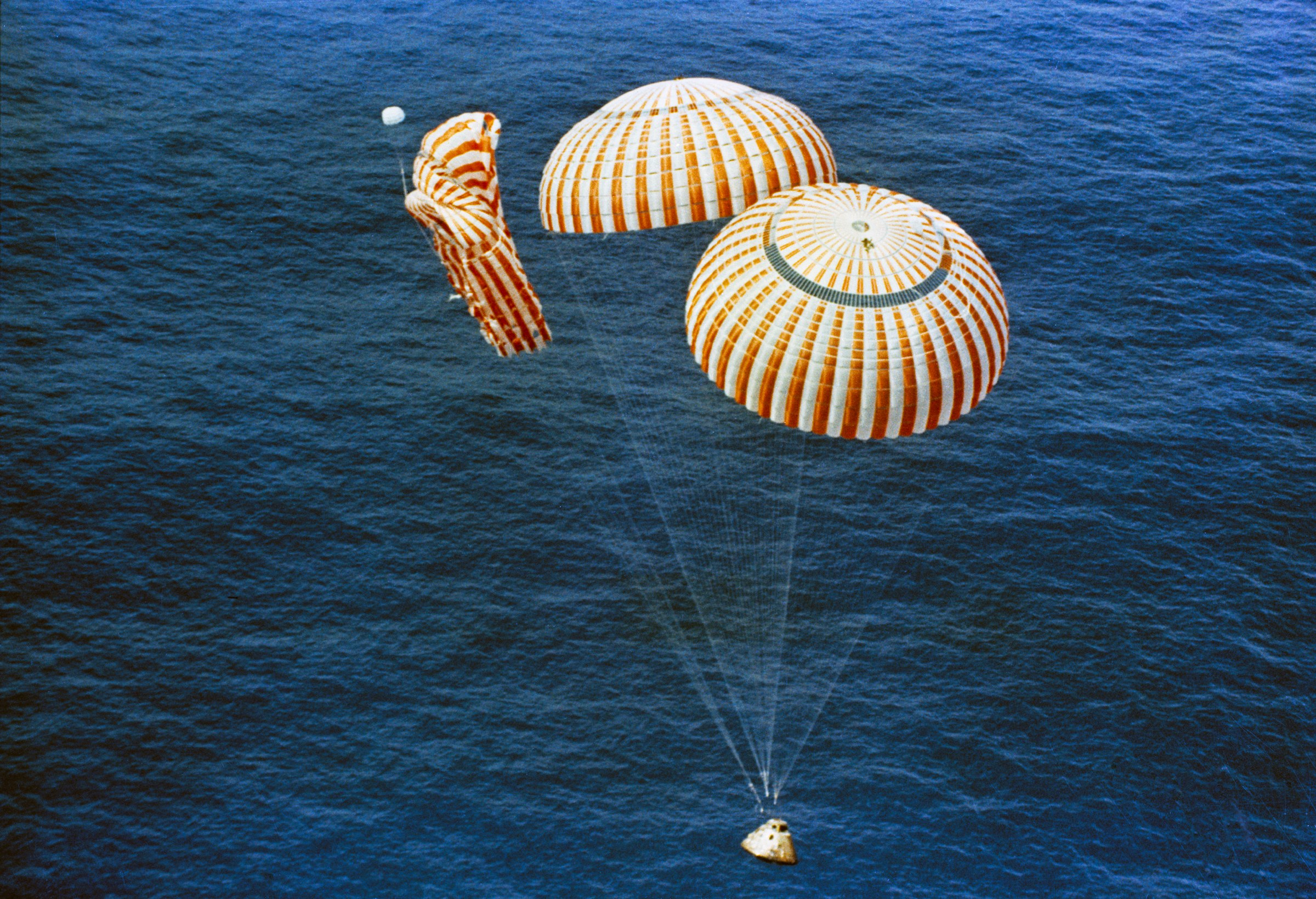
The Shuttle, however, can bring down tens of thousands kg of payload, in the payload bay and/or the middeck. Trash, experiments, satellites, equipment, modules. Of all the precedents the Shuttle inaugurated, a world where equipment that failed could be returned and evaluated (as has been done extensively with repaired items on the Hubble Space Telescope - and even refurbished and reinstalled), this accomplishment is perhaps the greatest triumph of them all.

Oh, don't get me wrong, it's impressive that it's largely reusable, but there are some down-sides to that. And it has a pretty impressive payload capacity to begin with, no doubt. But, a big enough rocket, we can get that much payload, and more, as far or farther. Getting it back down? I wonder if we'll ever be able to do so much again. I doubt it will be in my lifetime.

I hope I'm wrong about that.

There are many triumphs particular to the manned portion of space exploration, not the least of which is that sending man into space means you have to lick two tough problems - how to get him out there and how to get him back. History makes it pretty clear which one's tougher.

Read more...

Bringing it Back to Earth Part 1

>> Saturday, May 15, 2010


On Wednesday's post, I recycled an opinion I'd had about the space program nearly two years ago. As the sun sets on the Shuttle program, my opinion hasn't changed; however, what I've learned the past two years about proposed alternatives has brought a particular characteristic to mind. And I feel I have to note what the Shuttle has done better than any vehicle that proceeded it and probably any that will follow (with the possible exception of the Buran which only flew once in a test configuration and shouldn't really count the same). It is also, notably, a side effect of human spaceflight, space exploration will never be complete without it.

Return capability.

Big deal, you might think. So what?

Except it is a big deal. As hard as it is to get objects into space and flung to the far corners of the solar system, it's relatively straightforward, almost childlishly simple compared with sending a ship just a little way up and bringing even part of it back intact. It's an easy thing to ignore.

Do you know how many non-human missions have gone up and returned with any samples or results or anything other than bits of space garbage (not counting unmanned test flights for manned spacecraft?). Me either, but I bet you can count them on one hand. [Looks up her beloved Wikipedia] Looks like there have been five to date and one in progress:

  • Luna 16 (101 g) - Soviet 1970
  • Luna 20 (30 g) - Soviet 1974
  • Luna 24 (170.1 g) - Soviet 1976
  • Genesis (which collected solar wind samples of unknown mass but g likely embedded in solids though it weighed 275 kg) - US 2001-2004 - failed during landing.
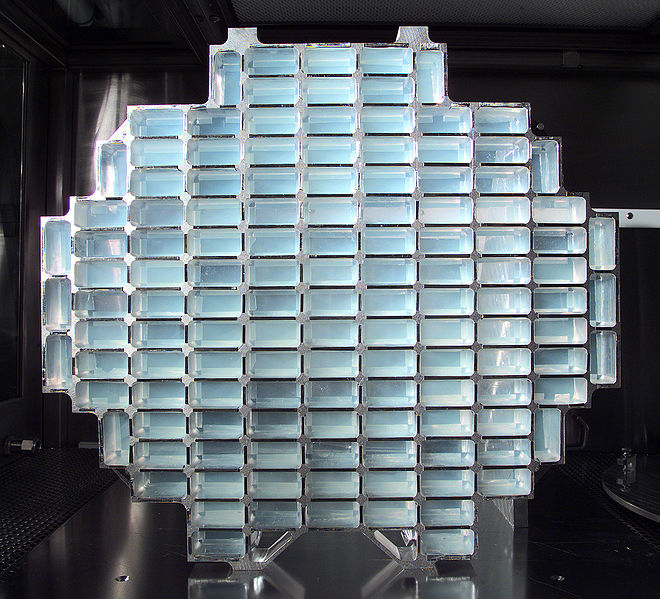
  • Stardust (again unknown mass of dust but g only most likely embedded in aerogel) - US 1999-2006
Japan is also going to try to collect samples from it's asteroid rendezvous (which didn't manage a planned landing) in June of 2010. Again, we're talking grams.

Compare that to the lunar dust collected per Apollo mission:
  • Apollo 11 (22 kg + film etc + crew)
  • Apollo 12 (34 kg + film etc + crew)
  • Apollo 14 (43.5 kg + film etc + crew)
  • Apollo 15 (77 kg + film etc + crew)
  • Apollo 16 (96.6 kg +film etc +crew)
  • Apollo 17 (115 kg +film etc +crew)
There's more to this story but I think it's bigger than a single post. Consider it to be continued.

Read more...

RS Classic: Let’s Talk about the Space Shuttle and more

>> Wednesday, May 12, 2010


As Today.com is no longer in existence as it was (and they wouldn't let me on when they were), I'm going to recycle some of my old and beloved posts here 'cause, hey, I liked them. And, since I'm consumed with my current writing project, I feel less guilty.

Here's the first that wasn't "Hi, I'm me." from August 29, 2008:

I don’t know how many of you feel about the Space Shuttle. I’ve been working in the space industry for nearly 20 years and my own feelings are not clear cut. I read the blog for Wayne Hale yesterday. Wayne Hale was the manager for the Space Shuttle. I know him and I know he cares deeply for this program, for what he did. He knows the end is inevitable.

The Shuttle program is coming to an end. People are talking about extending it like that’s a viable option. But the people who supported this program and provided eighty kagillion [kagillion is a technical term] tiny custom parts have moved into other businesses. Some are suppliers that have moved to more viable customers, providing materials that will be in demand for the long haul. Or they’re retiring. After all, the Shuttle’s been around for more than twenty years. Or they’ve already become part of the exploration effort.

The decision can’t be undone.

Truthfully, I’m not as fond of the Shuttle as Wayne is. Since my focus has been safety, it’s hard for me to look at it without seeing as a collection of things that can go wrong, some of which we didn’t see coming. I see it as a technological achievement that has also killed fourteen astronauts and I, like Wayne, never want that to happen again.

I see it as a mishmash of conflicting requirements, an exceptional engineering feat that was sold as more than a single item can be. Those unrealistic expectations have tarnished it despite the hard work it has done year after year, coming home chipped and worn from the horrendous environments of space and reentry. Yet, battered and limping somewhat from the clever workarounds we need to keep it’s aging systems working effectively and reliably, it can still do what nothing else we have can do: take big loads into orbit and bring them back down safely. And it can protect crews as large as seven going up and down. Building a replacement has been a nontrivial task and we’re not there yet.

No, I’m not as fond of the Shuttle as some. But a lot of good people have devoted decades to her care. And she has done some damn fine work. I know her problems, but I respect her and the job she’s done.

Here’s hoping her last few flights go off without a hitch.


Ironic, isn't it, how the more things change, the more they stay the same. Who knew? It's still pertinent. The cool thing about recycling this is that it makes me think of something I don't think I have written about. Next time, then.

Read more...

Mother's Day

>> Sunday, May 9, 2010


So, for Mother's Day, I received flowers from both husband and daughter and was taken to a movie: Ironman 2.

Guess who's idea the latter was (note that I have no teenage boys in my immediate life unless you count my husband)? But it's OK. For an action film (which I tend to enjoy), it was uber-geeky and I'm a geeky kind of gal. Actually, I enjoyed it quite well. Actually, just the sequence of donning the suit from a "briefcase" (which was far too light for the purpose) was just about worth the price of the ticket but I have to admit to geeking out over the over-the-top holographic hijinks in his much misused lab, the woman kicking a dozen butts to take out the bad guy (loved it!), the general insanity of Stark (which I've seen first hand in another individual), and some pretty cool robotic butt kicking.

If I found the villains less than impressive. And I also know that software and control systems for such suits are 30X times more challenging than a power source (and a power source like that one has like a jillion different uses), especially if they're going to be drones.

Ah well, must remember that it's comic book physics and, hey, I liked it anyway.

Happy Mother's Day to all you moms out there.

Read more...

Pundelirium

>> Saturday, May 8, 2010


Although at least one friend has sent me more quotes that I have still to go through in detail, I'm still not ready to put up more quotes. So, in the cruelest fashion possible, I'm inflicting more puns on you (sent by The Mother for your torment).

Enjoy or whatever.

Those who jump off a bridge in Paris are in Seine.

A man's home is his castle, in a manor of speaking.

Dijon vu - the same mustard as before.

Practice safe eating - always use condiments.

Shotgun wedding - A case of wife or death.

A man needs a mistress, just to break the monogamy.

A hangover is the wrath of grapes.

Dancing cheek-to-cheek is really a form of floor play.

Does the name Pavlov ring a bell?

Condoms should be used on every conceivable occasion.

Reading while sunbathing makes you well red.

When two egotists meet, it's an I for an I.

A bicycle can't stand on its own, because it is two tired.

What's the definition of a will? (It's a dead give away.)

She was engaged to a boyfriend with a wooden leg, but broke it off.

If you don't pay your exorcist, you get repossessed

With her marriage, she got a new name and a dress.

The man who fell into an upholstery machine, is fully recovered.

You feel stuck with your debt, if you can't budge it.

Local Area Network in Australia - the LAN down under.

Every calendar's days are numbered.

A lot of money is tainted - Taint yours and taint mine.

A boiled egg in the morning, is hard to beat.

He had a photographic memory that was never developed.

Once you've seen one shopping center, you've seen a mall.

Bakers trade bread recipes on a knead-to-know basis.

Santa's helpers are subordinate clauses.

Acupuncture is a jab well done.

Read more...

Every Little Bit Counts

>> Friday, May 7, 2010


I've spoken before about paying it forward and how every little bit counts. I've said you don't have to change the world to make it a little better. Every erg of energy you find away not to use is one less erg to pump from the ground (and/or spill in the Gulf). Every please and thank you or unexpected smile can be a ray of sun in someone else's gloomy day.

And spreading even a modicum of good, standing up for what you think is right even a little bit, is better than doing nothing at all.

So, I found this story interesting. Roger Cohen of the NYT wrote about it in an editorial, particularly the novel recently released in English written by Fallada called Every Man Dies Alone (aka Alone in Berlin [UK] and Jeder stirbt für sich allein [originally]). Written in 1947 in apparently less than a month, it was described by Cohen as gripping and powerful, bringing life in Nazi Germany to vivid and painful life. It's the tale of two real people, Otto and Elise Hampel, who defied their own country in a small, quiet every-man kind of way and died for it. Their files were given to Fallada after the war was over and inspired this novel.

I can't speak to the quality of the novel. I have not (yet) read it. However, I am quite inspired by the Hampels, leaving angry postcards denouncing the Nazi regime all over their city in prominent places. Yet another noble story I'm glad to have stumbled across and thought I'd share it with you, those of you who haven't heard it yet.

I have to admit I liked the smirk on Otto's face.

Read more...

Family Chasms

>> Wednesday, May 5, 2010


Ironic to stumble across this topic right before Mother's Day and yet, somehow, fitting. This article in the NYT was discussing a growing trend toward estrangement between parents and their grown children.

I have my own ideas on this, perhaps because one could say I'm estranged from my own mother. I'll be honest. I'm comfortable with that. But that's a different story. Note that, as I describe "children" here who are making conscious decisions, I'm referring to grown children, not legal minors.

I will say that I think this growing trend has two causes, one a bit healthier than the other. The first cause is that I think grown children are willing to acknowledge today when they had an unhealthy childhood, when they had parents that misused them. Adult scions are much less inclined to maintain an uncomfortable relationship out of guilt. I think that, twenty years ago, grown children felt less inclined to speak out or keep themselves away from parents who were toxic to their happiness. The fact that children can move on with their lives without maintaining unhealthy relationships from misplaced guilt is likely a good thing.

However, the pendulum can always swing too far the other direction. I suspect (and as my children are all too young to leave home, I'm speculating) that many children are severing their ties with their parents not because of mistreatment but because they just felt their parents "just didn't do enough for them." And, again I suspect from observation, that it's a direct result of children growing up with less and less responsibility and more and more privilege. Indulgences and consideration from parents are taken for granted. And, when children reach an age when they might be expected to fend for themselves, these children might feel their parents owe them more: free childcare, money, support, a place to live, etc. BUT have no right to set any limits or make any rules, even criticize actions or even just say, enough.

These self-important egocentric children see everything their parents didn't do for them, every car they didn't buy or bail money they didn't provide as a form of abuse. These children have gone their whole lives taking everything their parents have provided as a right. If they don't get what they see they deserve, they'll turn their backs on their parents without hesitation.

The sad part is that, once, taking care of parents was part of family. For unhealthy families, it could be a painful duty. But, for most families, it was cheerfully part of the circle of life, giving when your parents needed it just as they did when the children needed it.

For many parents, who I believe were doing their very best, they will have a sad future, all of their efforts unappreciated and discarded when they are no longer seen to be of use.

And that's very sad.

Read more...

Pundemonium

>> Tuesday, May 4, 2010


Needing an occasional laugh can make one desperate.

So desperate, you'll find puns. Or you'll post them if someone sends them to you.

The roundest knight at King Arthur's round table was Sir Cumference. He acquired his size from too much pi.

I thought I saw an eye doctor on an Alaskan island, but it turned out to be an optical Aleutian.

She was only a whisky maker, but he loved her still.

A rubber band pistol was confiscated from algebra class because it was a weapon of math disruption.

The butcher backed into the meat grinder and got a little behind in his work.

No matter how much you push the envelope, it'll still be stationery.

A dog gave birth to puppies near the road and was cited for littering.

A grenade thrown into a kitchen in France would result in Linoleum Blownapart.

Two silk worms had a race. They ended up in a tie.

Time flies like an arrow. Fruit flies like a banana.

A hole has been found in the nudist camp wall. The police are looking into it.

Atheism is a non-prophet organization.

Two hats were hanging on a hat rack in the hallway. One hat said to the other, 'You stay here, I'll go on a-head.'

I wondered why the baseball kept getting bigger. Then it hit me.

A sign on the lawn at a drug rehab center said: 'Keep off the Grass.'

A small boy swallowed some coins and was taken to a hospital. When his grandmother telephoned to ask how he was, a nurse said, 'No change yet.'

A chicken crossing the road is poultry in motion

The short fortune-teller who escaped from prison was a small medium, at large.

The man who survived mustard gas and pepper spray is now a seasoned veteran.

A backward poet writes in-verse.

In democracy it's your vote that counts. In feudalism it's your count that votes.

When cannibals ate a missionary, they got a taste of religion.

Don't join dangerous cults, practice safe sects!

I hope, someday, you can forgive me.

Read more...

Hope For My Brain Yet

>> Monday, May 3, 2010


I've been worried. See, after multiple pregnancies, years with children including a brilliant teenager and more than 20 years on the job working (indirectly) for the government, I've been wondering if my brain was turning to mush.

Good news, it's apparently not (or I'm the exception).

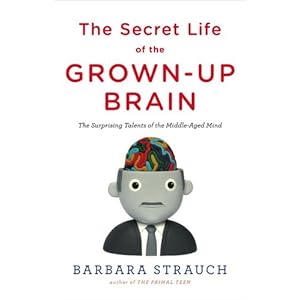
According to this talking about The Secret Life of the Grown-Up Brain by Barbara Strauch, the middle-aged mind is still growing and getting smarter, better with logic and judgment thanks to many hard-learned lessons (unless we're talking Tea Party Members), but a wee bit slower with the recall and memory retention.

I have a theory, no more a hypothesis, that we don't actually have a worse memory so much as it gets more crowded with time. When we're young, we cross-post and associatively link all kinds of things because, hey, there's only so much data - need to access it. As we get older and the sheer "volume" of data increases, we shove it into any free spot, perhaps not being quite so assiduous about making sure we have links to get it back if we need it. It's like having a huge filing system but only so much time to get everything put away in a logical manner and, even if we could, there's so much of it it takes a while to figure out where we put it when we need it. I suspect many of our middle-aged brains (for those of us in middle age) could seriously use a system defrag.

Which means it's not so much our memories failing as our ability to recall the data we've squirreled away.

The cool thing, as I continue to speculate, is that lack of recall doesn't mean that it affects our judgment. At least according to Goleman, our emotional response to a stimulus takes place somewhere else (related to the hippocampus), which means that we can use what we learned as we go through life without necessarily remembering why we think something's a good (or bad) idea.

Teenagers (and apparently this Ms. Strauch has a book about the teenage mind as well) are quick to learn and gather data like sponges (I presume good and bad), but judgment--not so much. It takes a few hard knocks, I suspect to really appreciate why something is a bad idea, even if you've heard it described that way by your readily ignored parents. No emotional impact, you know.

Which is why I see a company that charges >$300 up front so that teenagers can work for them at minimum wage over the summer as a scam instead of an opportunity.

Now, if I could just remember why...

Read more...

Labels

Blog Makeover by LadyJava Creations